
The focus on a possible secret deal between Israel and Somaliland misses the point. The real limit is not secrecy, but the absence of recognition in a system where sovereignty is collectively mediated.
Michael Asiedu
26 May 2026
Chinese version | Russian version
When Somaliland’s former president Muse Bihi Abdi called for any agreement with Israel to be made public, he framed the issue as one of transparency and constitutional accountability. Bihi argued that the public has a right to know what commitments underpin Israel’s December 2025 recognition and whether these align with Somaliland’s constitutional and religious principles. That is a legitimate domestic concern. But analytically it misses the central point.
The core issue is not what the agreement contains. It is whether such an agreement can carry full political and legal weight when Somaliland remains unrecognised by the African Union (AU), the United Nations, and almost all states in the international system.
Israel’s decision was unprecedented. On 26 December 2025 it became the first country to formally recognise Somaliland as an independent and sovereign state, accompanied by a declaration of mutual recognition and plans for cooperation in sectors such as agriculture, health, and technology. The move was symbolically significant, but the reaction it triggered is more analytically revealing.
Somalia condemned the decision as an unlawful step and a deliberate attack on its sovereignty. The AU reaffirmed its longstanding position that Somaliland remains part of the Federal Republic of Somalia and called for the immediate reversal of Israel’s decision. The European Union and several states including Egypt and Turkey also reiterated their support for Somalia’s territorial integrity. These responses were not isolated diplomatic protests. They reflected a shared commitment to a foundational principle of African regional order, the preservation of inherited borders.
That principle, uti possidetis juris, is rooted in the 1964 Cairo Resolution (AHG/Res.16(I)) of the Organisation of African Unity (OAU, predecessor to the AU) which commits African states to respect the borders existing at independence, a commitment the AU has since enshrined in its own Constitutive Act. Its purpose is explicitly preventive and aims to avoid fragmentation and conflict that could follow if secessionist claims were widely endorsed. Somaliland is therefore not assessed solely on its internal attributes such as relative stability or functioning institutions. It is assessed in terms of what its recognition would imply for the wider territorial order.
Somaliland’s advocates contest this framing. They point to the 1960 union between British Somaliland and Italian Somalia as a voluntary merger that can be voluntarily dissolved, arguing that uti possidetis juris protects independence-era borders rather than post-independence political unions. The AU Commission Chairperson rejected Israel’s December 2025 recognition within hours of the announcement, and the AU Peace and Security Council convened an emergency ministerial session in January 2026 specifically to address it. The institutional response could not have been clearer.


The 2010 ICJ advisory opinion on Kosovo established that unilateral declarations of independence are not inherently unlawful under international law. But Africa has long insisted on its own normative framework, and it is that framework, not general international law, that governs Somaliland’s prospects.
Bihi’s demand for transparency presupposes that Somaliland is operating within a recognised system of sovereign exchange where agreements between states can be evaluated, contested, or legitimised domestically. But Somaliland occupies a different category. It has functioned as a de facto state since 1991 yet remains a de jure non state in the eyes of the AU and the wider international system. Under those conditions transparency does not resolve the fundamental constraint. Even a fully disclosed agreement would still operate within a framework that denies Somaliland full sovereign standing.
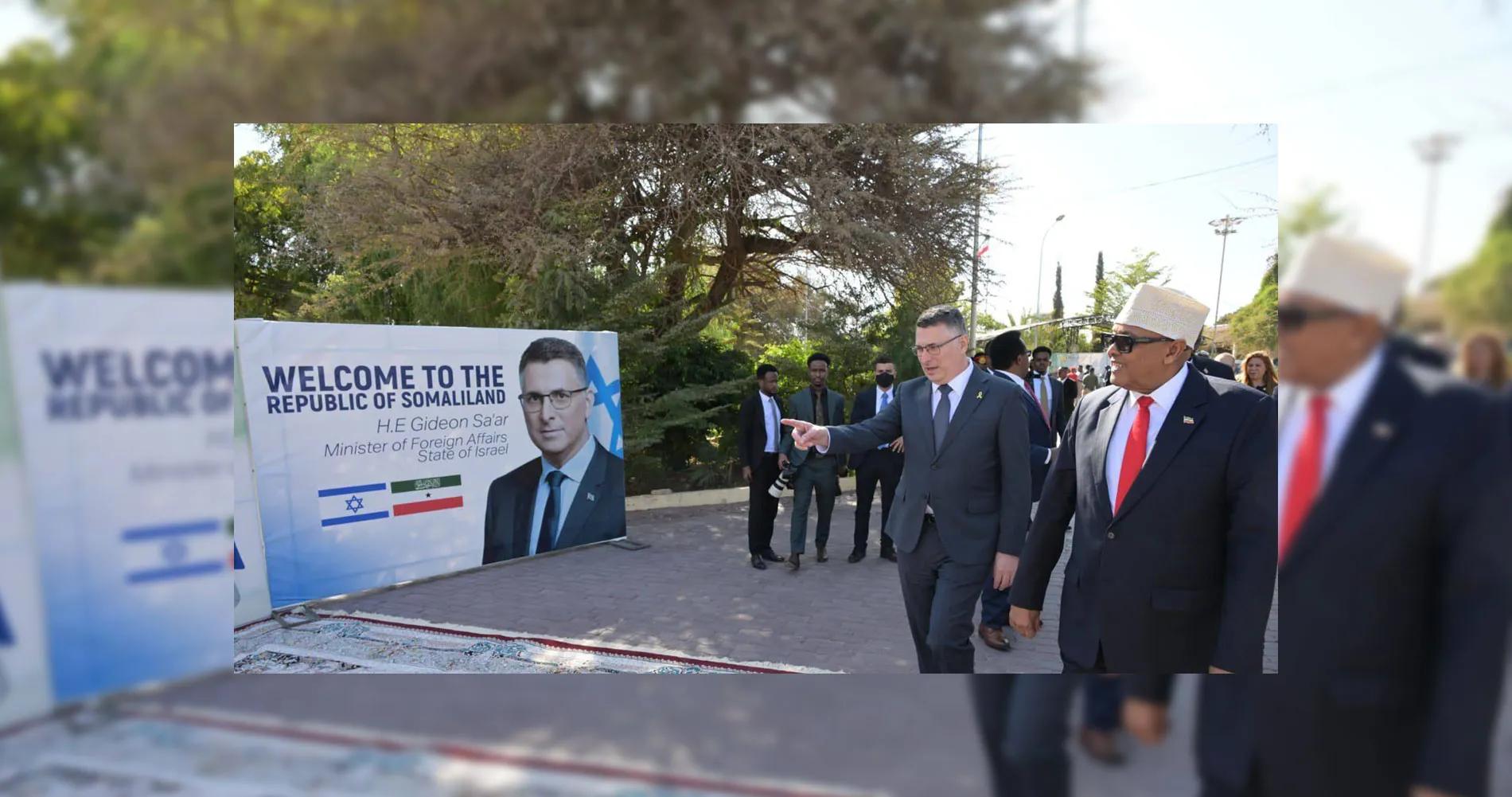
The absence of a recognition cascade underscores this point. Prior to Israel’s move, Somaliland had not been recognised by any country. Subsequent reporting documents diplomatic engagement including a visit by Israel’s foreign minister to Hargeisa and discussions of future cooperation. Yet there is no evidence that other states have followed Israel’s lead. In the African context recognition is not typically consolidated through isolated bilateral acts. It is mediated through regional consensus. Without that consensus external recognition however symbolically significant remains politically thin.
Israel’s move is better understood as strategically significant rather than legally transformative. Somaliland occupies a critical location along the Gulf of Aden adjacent to one of the world’s busiest maritime corridors. Its position has attracted interest not only from Israel but also from other regional actors particularly in the context of heightened insecurity linked to the Red Sea and Yemen and the Houthis. Engagement with Somaliland offers potential advantages including logistical access, proximity to key shipping routes and cooperation in a strategically sensitive region.
But strategy does not settle sovereignty. Israel can recognise Somaliland, deepen bilateral ties and pursue economic or security cooperation. What it cannot do unilaterally is override the normative and institutional framework that governs recognition in Africa. That authority remains collectively structured with the AU playing a central gatekeeping role.
The Somaliland case therefore illustrates a broader dynamic in international politics. Statehood is not determined solely by internal capacity including territorial control governance or institutional continuity. It is also shaped by external recognition which in Africa is heavily mediated by regional norms designed to preserve territorial integrity. Where those norms are firmly held, unilateral recognition struggles to translate into broader acceptance.
The strongest reading of the current controversy is not that Somaliland’s public has been denied transparency over a potentially sensitive agreement. It is that the Israel-Somaliland episode exposes the limits of unilateral recognition in African politics. Bihi’s intervention raises an important domestic question. But the deeper constraint lies elsewhere. The architecture of African sovereignty, built on inherited borders and regional consensus, has so far proven more resilient than its critics assume. Bilateral recognition on its own cannot deliver what Somaliland ultimately seeks, consolidated and widely accepted statehood.