
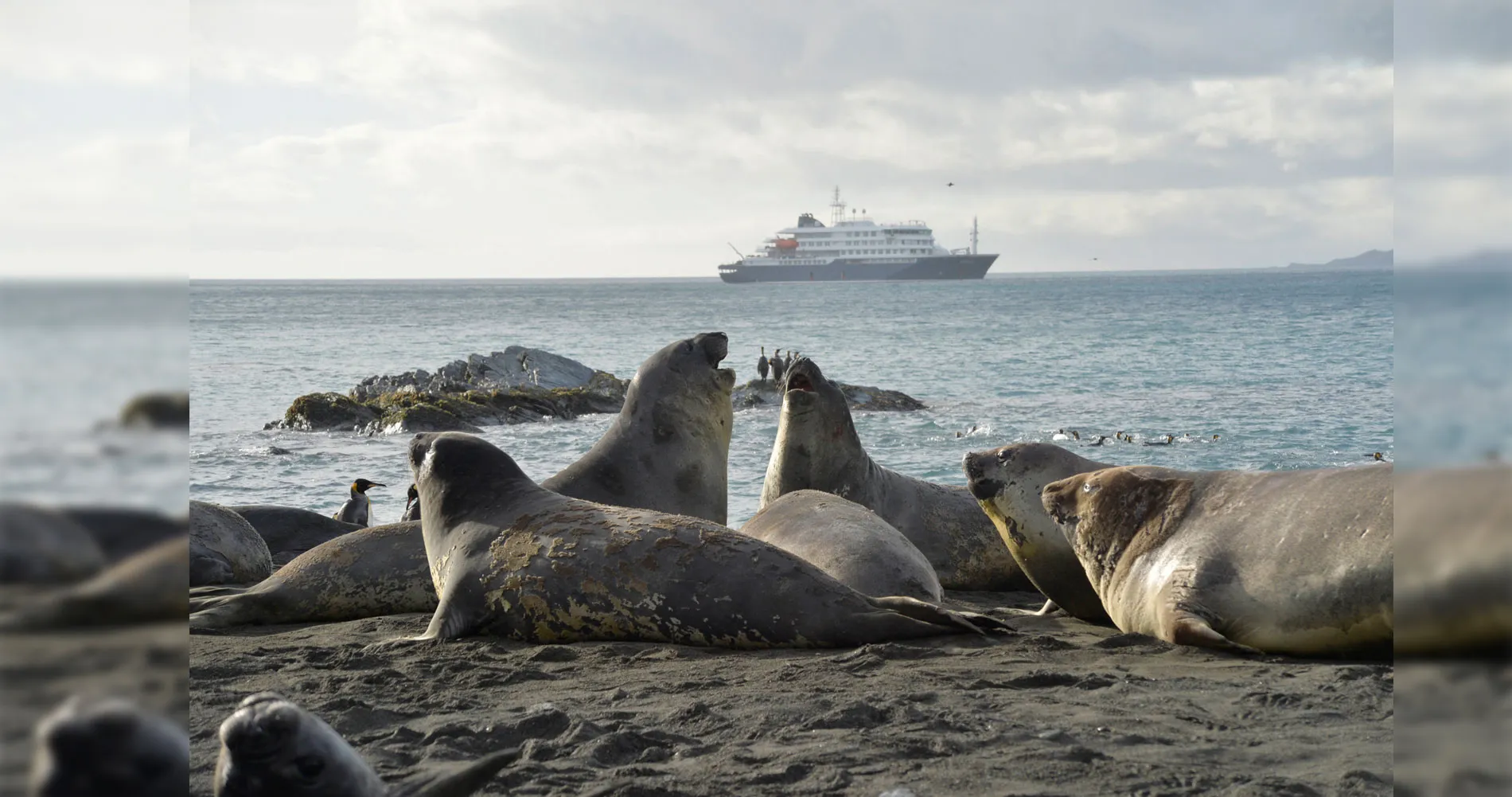
In late October 2024, researchers flying drones over the beaches of South Georgia expected to see what had defined the island for decades: dense colonies of southern elephant seals packed along the shore. Instead, large stretches of sand lay strangely empty. What first appeared to be a temporary anomaly soon revealed itself as one of the most dramatic marine mammal population collapses ever recorded in the Southern Atlantic and the consequence of a new virus.
Lukas Barcherini Peter
13 May 2026
German | Russian | French
A study published in Communications Biology (Bamford et al (2025)) confirms that the number of breeding female elephant seals on the South Atlantic Island of South Georgia fell by 47% between 2022 and 2024. Because the island hosts more than half of the global breeding population, this decline translates to an estimated 53,000 females missing in a single season. An unprecedented loss, jeopardizing the entire existence of the species.
Southern elephant seals (Mirounga leonina) are the largest seals on Earth. Bulls can grow to nearly 6 meters in length and weigh up to 4 tonnes, while females typically reach about 3 meters in length and weigh around 3 tonnes. They spend most of their lives at sea, diving deeper than 1,500 meters and roaming thousands of kilometers across Antarctic and sub-Antarctic waters in search of fish and squid. Once a year they return ashore to breed. Females give birth within days of arrival, nurse their pups, then mate again before returning to the ocean. For decades, South Georgia’s population remained remarkably stable. That stability collapsed with the arrival of a virus that was never meant to reach this far south.
The culprit is a highly aggressive version of bird flu known as H5N1, part of a fast-spreading branch of the virus called Clade 2.3.4.4b. Influenza viruses naturally circulate in wild birds and evolve through mutation and genetic reshuffling. What makes this version exceptional is not its origin, but its unprecedented global spread and expanded host range.
Since around 2020, this branch has moved rapidly across continents, carried primarily by migratory birds. Along the way it displaced older versions of the virus and began infecting mammals on a scale rarely seen before, including sea lions, seals, foxes, and otters. In many species, outbreaks have produced mass mortality events.
Human activity has played an indirect but important role in this expansion. Industrial poultry farming, global trade networks and dense livestock populations create ideal conditions for viral amplification. Large outbreaks in domestic birds increase environmental viral loads, raising the likelihood of spillover into wildlife. Habitat change and altered migration patterns further reshape contact zones between species.
Until recently, Antarctica and the surrounding sub-Antarctic islands had remained largely untouched. That changed in September 2023, when infected brown skuas were detected on South Georgia. These seabirds likely carried the virus southward from outbreaks in South America. Within months, the virus likely jumped from birds to marine mammals, including the southern elephant seals.
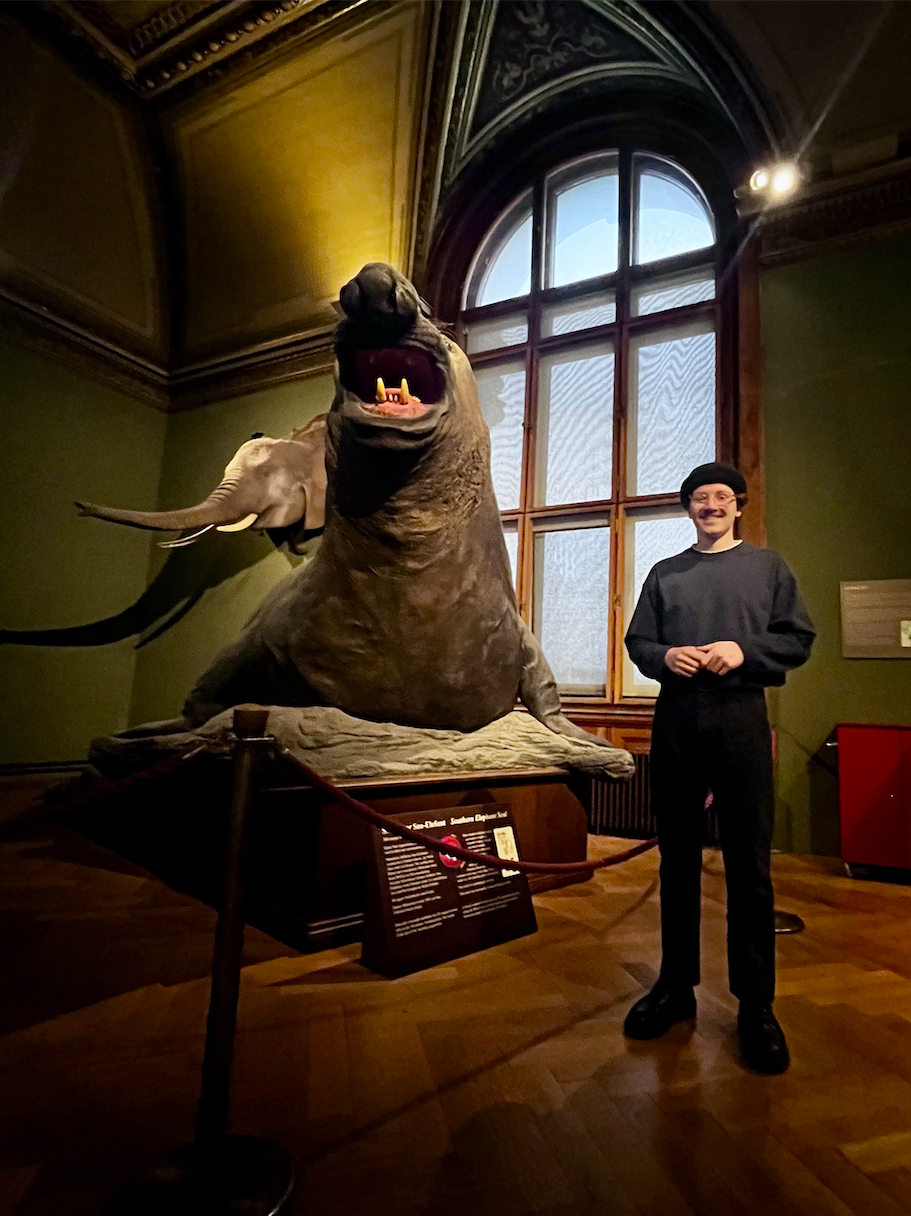 Elephant Seal and size comparison to author (175 cm), pictures taken at the NHM Vienna
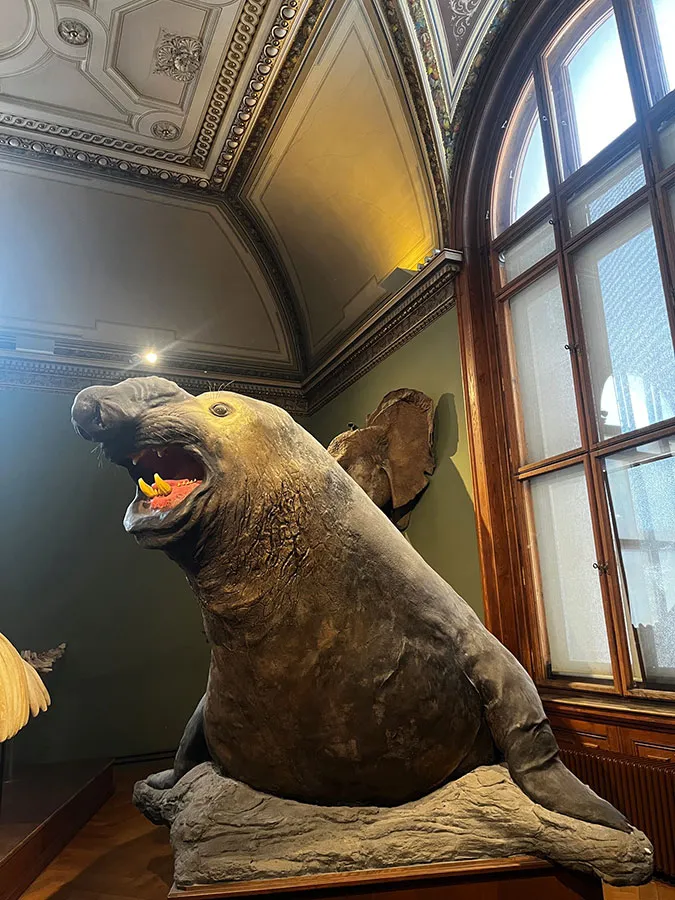 © iGlobenews, picture by L. Barcherini Peter
Once established, it encountered ideal transmission conditions. Elephant seals breed in extremely dense colonies, with thousands of animals packed tightly together. Newborn pups, immunologically naive and physically fragile, are especially vulnerable. In Argentina’s Peninsula Valdés, the same virus killed up to 97% of elephant seal pups in some colonies. At South Georgia, adult deaths are harder to observe because many animals die at sea, but the sudden collapse in breeding attendance strongly suggests substantial adult mortality.
What makes this outbreak especially dangerous is the virus’s behavior in mammals. Unlike older avian influenza strains that mainly attacked the respiratory system, clade 2.3.4.4b often invades the brain. In seals, infections frequently cause severe encephalitis, leading to seizures, disorientation and rapid death. Viral material has also been detected in heart tissue and other organs, indicating widespread systemic damage. Genetic mutations associated with improved replication in mammalian cells have been identified in viruses isolated from marine mammals, suggesting ongoing adaptation to new hosts.
To measure the scale of the collapse, researchers used drones equipped with high-resolution cameras to survey South Georgia’s three largest breeding beaches in both 2022 and 2024. The pictures allowed scientists to count individual adult females with high accuracy. Under normal conditions, year-to-year variation in breeding numbers rarely exceeds 10%. A decline of nearly half the population within two years is far outside natural fluctuation and points to an extraordinary external shock.
While the virus is the immediate cause, environmental stress may be amplifying its effects. The study stresses, that the seals depend on stable sea-ice dynamics and productive feeding grounds to rebuild energy reserves after breeding. Long-term studies from other regions suggest a consistent relationship between sea-ice change and reduced elephant seal population numbers. During the 2023–2024 winter, unusual sea-ice anomalies occurred in the South Atlantic. These alone cannot explain the collapse, but they may have weakened the seals’ ability to recover from infection and reproductive stress.


The consequences extend beyond the seals themselves. Southern elephant seals are major predators in the Southern Ocean, consuming enormous quantities of fish and squid and helping regulate marine food webs. They also function as ecological sentinels. Because they range across vast ocean regions and respond quickly to environmental change, shifts in their health often reflect broader ecosystem instability.
Recovery, if it occurs, is likely to be slow. Female elephant seals are long-lived with low adult mortality, making populations vulnerable to sudden losses. Demographic models suggest recovery could take decades. Under severe scenarios, population numbers may not return to pre-outbreak levels before the end of the century.
Direct intervention is virtually impossible. Vaccinating wild seals or treating infected animals across thousands of kilometers of remote coastline is not feasible. Instead, scientists are focusing on monitoring and early detection. Drone surveys, satellite imagery and international disease reporting networks are being expanded to track population trends and viral spread. Follow-up surveys will determine whether the missing females return or whether the losses represent permanent mortality.
What is unfolding on these remote beaches is more than a localized wildlife disaster. It marks the arrival of a global disease system into one of Earth’s last relatively isolated ecosystems. The spread of the virus into the Antarctic region shows how emerging pathogens, the impacts of industrial meat production, and human-altered ecosystems now intersect even in the planet’s most remote places. For now, the empty beaches of South Georgia stand as quiet evidence of how quickly ecological stability can unravel. Whether the world’s largest elephant seal population can recover from this shock remains uncertain.