
The growing intertwining of political power and economic interests in Donald Trump’s inner circle is increasingly becoming the focus of public and regulatory debate. Among other things, the spotlight is on crypto activities such as meme coins, stablecoins, and the World Liberty Financial project, which are generating substantial financial gains within Trump’s political circle. According to a recent report, investors in Trump’s meme coins have suffered a loss of $3.81 billion. Is such an intertwining of politics and finance legal?
Günther Kornfellner
8 July 2026
German version
According to polls, Donald Trump’s political heyday is a thing of the past. The role of Trumps’ crypto activities is increasingly coming into the spotlight. Nearly one million people who invested in Trump’s meme coin have now lost their money. A report by Nansen published in late June 2026 confirms that these investors’ losses amount to USD 3.81 billion. In contrast, according to this report, Donald Trump earned approximately USD 636 million in profits.
In this context, it is worth noting the price trend of the World Liberty Financial Token (WLFI), which has been on a downward trajectory since the beginning of the year and declined further in early April 2026. This raises legitimate questions regarding potential conflicts of interest and abuse of power.
The crypto activities surrounding Donald Trump highlight the close intertwining of politics and business in the U.S. The use of political positions for personal gain is not a phenomenon exclusively associated with Trump or the Republicans. Democratic figures, such as Nancy Pelosi, also continue to face allegations of insider trading.
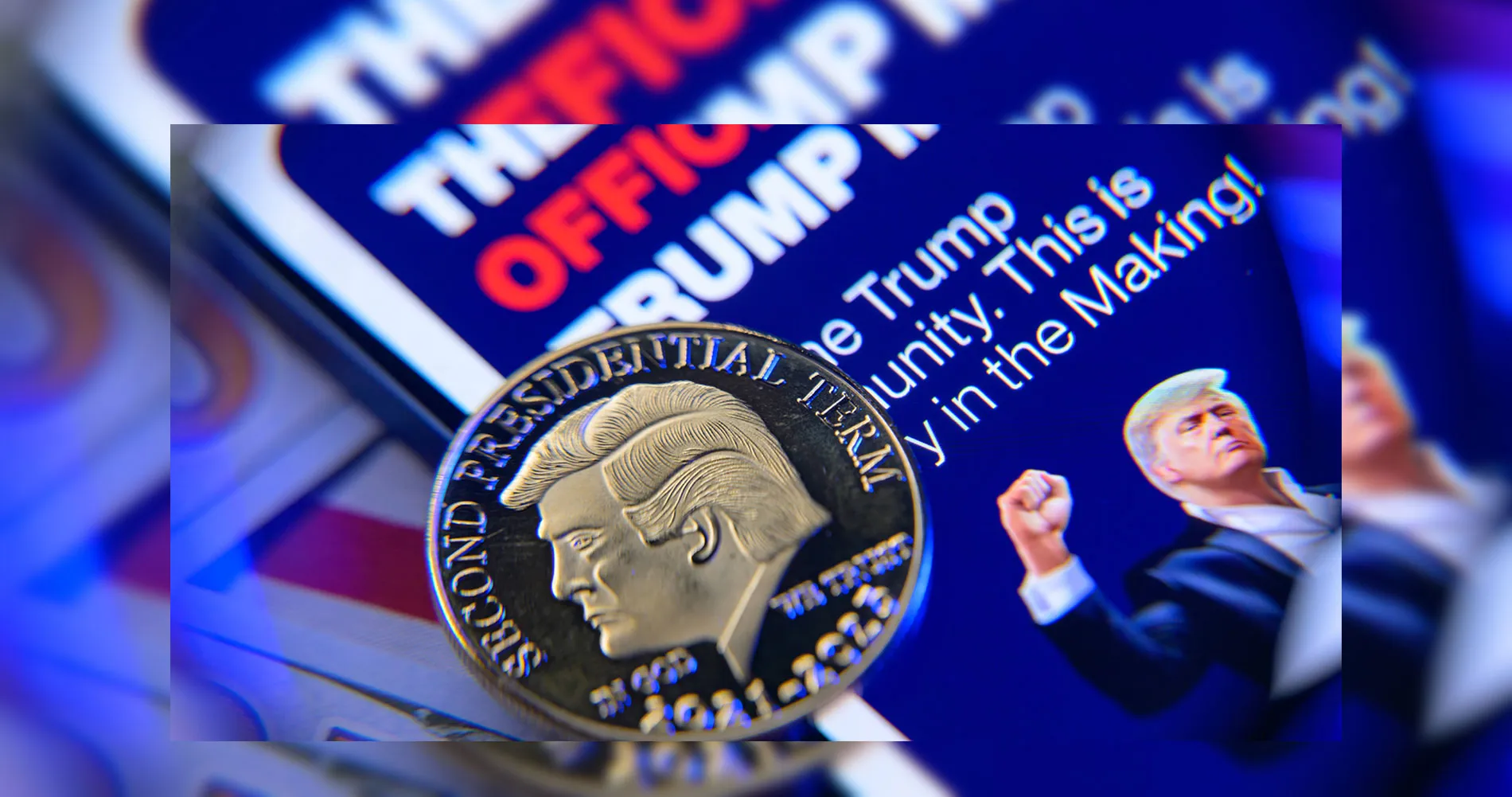
The development of so-called meme coins plays a central role in connection with Donald Trump’s cryptocurrency activities. Meme coins are a specific category of cryptocurrencies that are often based on viral internet phenomena, social media trends, or well-known personalities. Unlike established cryptocurrencies such as Bitcoin or Ethereum, meme coins generally do not pursue any technical or economic innovation goals but thrive primarily on speculative interest and community support. Due to their often unpredictable price behavior and lack of fundamental value, they are considered particularly high-risk. Examples such as the TRUMP or MELANIA tokens show that such meme coins can generate substantial profits for their creators, while many investors face significant financial losses.
Stablecoins form a key component of the crypto strategy surrounding Donald Trump. These digital assets are typically backed, at least in part, by traditional asset classes such as U.S. Treasury bonds and are designed to track the performance of the U.S. dollar. Because of these characteristics, stablecoins play a central role in the crypto market.
Stablecoins differ fundamentally from meme coins. While meme coins generally offer neither technological nor economic utility, stablecoins represent the digital form of fiat currencies on the blockchain and are designed to ensure a stable value.
The stablecoin USD1, which is operated by associates of the Trump family in collaboration with the DeFi project World Liberty Financial (WLF) and is backed by U.S. Treasury bonds, had a market capitalization of approximately $5 billion as of mid-June 2026, making it one of the 40 largest cryptocurrencies worldwide. The World Liberty Financial Token, along with the governance token WLFI, offers holders tradable voting rights regarding the project’s development and management. This means that USD1 functions within the World Liberty Financial ecosystem as a stablecoin that serves both as a means of payment and as collateral, while WLFI, as a governance token, enables users to participate in decisions regarding the system.


The intertwining of politics and business is evident in the fact that the Trump administration moved to remove regulatory barriers in the crypto sector and hindered or halted key investigations into crypto fraud and money laundering. A frequently cited example is an order issued in February 2025 by then-U.S. Attorney General Pam Bondi. In it, state attorneys general were instructed to expedite the review of all cases initiated before October 2022 and, where appropriate, to dismiss them. This measure affected numerous investigations into economic crimes, fraud, and money laundering. Observers noted that several crypto companies—allegedly linked to individuals or financing networks associated with Donald Trump—also benefited from these case reviews.
At the same time, foreign actors, including state-controlled funds from the United Arab Emirates (UAE) and Chinese entrepreneurs, invested billions in Trump’s crypto projects. One particularly controversial deal was the acquisition of a 49 percent stake in WLF by a UAE-linked company just days before Trump took office, followed by a policy reversal that allowed the export of advanced AI chips to the UAE—a deal that had previously been blocked for national security reasons. These developments raise questions about potential conflicts of interest.
Furthermore, numerous crypto companies and token investments linked to the Trump family are organized through a network of holding companies, special-purpose entities, and international investment structures. While these are not exclusively traditional offshore or shell companies, the multi-tiered ownership structure significantly complicates the identification of beneficial owners and the traceability of capital flows. In the case of World Liberty Financial in particular, control is exercised through several intermediary companies, while specific ownership structures and sources of financing are disclosed only to a limited extent. It is important to note that such multi-tiered structures are used by many market participants, and similar layering techniques are widespread for tax, liability, and regulatory reasons.
The close intertwining of political officeholders and economic interests has repeatedly sparked allegations of conflicts of interest and the potential use of public office to advance private business interests. Two frequently discussed examples from Donald Trump’s circle illustrate this debate.
First, the founding of the aforementioned crypto project, World Liberty Financial, is worth highlighting; the Trump family significantly participates in its financial returns through holding structures. Critics point to potential conflicts of interest in this context, as regulatory and political decisions could potentially impact the economic value of the associated corporate structures.
Second, the role of crypto investor Justin Sun, who reportedly invested substantial funds in crypto projects linked to Trump while simultaneously engaging in the political arena, in the public debate, the timing of political developments and the withdrawal of SEC proceedings against Sun is also being discussed in this context. Critics interpret such circumstances as possible indications of a so-called “pay to play” system, in which financial contributions are linked to political influence.
Through its activities in the cryptocurrency sector, the Trump family has built a billion-dollar business that surpasses the Trump empire’s traditional sources of revenue, such as real estate and golf courses. At the same time, many small investors are facing unprecedented losses. Political influence and the involvement of foreign investors raise fundamental questions about the integrity of U.S. politics and the U.S. financial markets.