
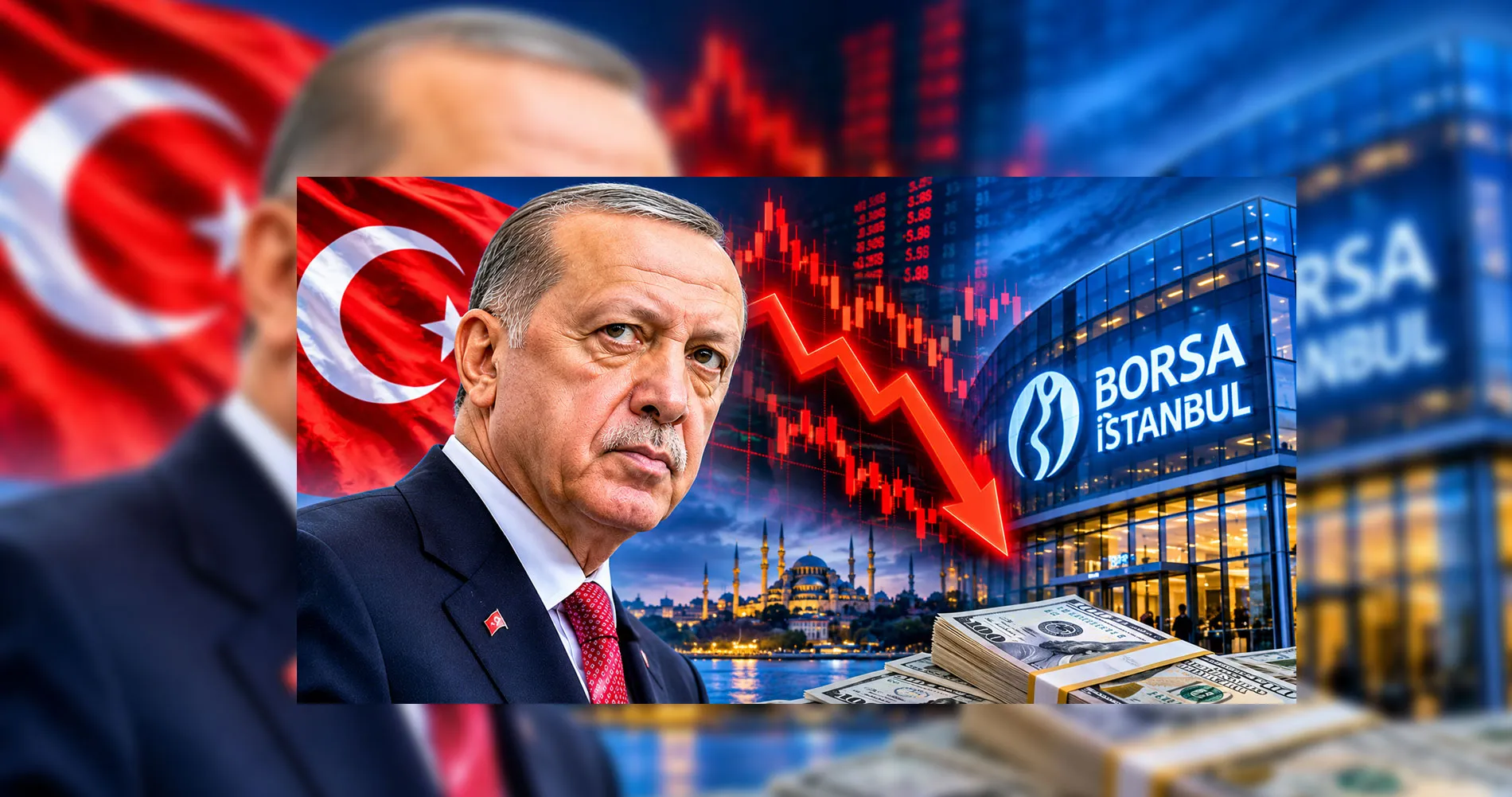
Turkey’s investment fund crisis has exposed serious weaknesses in market oversight, trapped nearly half a million everyday investors and entangled key figures from President Recep Tayyip Erdoğan’s ruling party. With foreign institutions also facing collateral damage, the scandal has become a major test of economic credibility and political accountability.
Meric Sentuna Kalaycioglu
18 November 2026
Turkey’s investment fund boom ended in a crisis on September 17, when regulators ordered the liquidation of 131 funds managed by seven portfolio companies. Since then, the sudden implosion has been sending shockwaves through the national economy and generating intense political turbulence. The funds held more than USD 20 billion in assets (approximately 984 billion Turkish lira) and had attracted around 455000 investors seeking returns to hedge against inflation and a weakening currency.
Regulators stepped in when the rapidly ballooning funds were hit by an unstoppable wave of redemption requests that managers could no longer fulfill. The authorities are now investigating widespread market manipulation. Officials emphasize that the USD 20 billion figure represents total assets frozen in the crisis, not confirmed funds stolen or evaporated.
Though the crash took retail investors by surprise, the warning signs were not entirely new. Turkish Minister of Finance Mehmet Şimşek had raised concerns about suspected manipulation through investment funds in November 2025. Yet, the sector continued to expand unchecked. The collapse has since triggered over a hundred arrests, asset freezes and emergency measures to contain market disruption. The benchmark of Borsa Istanbul, the sole stock exchange of Turkey, suffered its worst monthly performance since decades in September 2026, reflecting the damage to confidence beyond the funds themselves.
At the center of the probe are two asset management companies: Tera Portföy and Pusula Portföy. Investigators say managers poured capital into low-liquidity stocks, artificially trading them among affiliated accounts to manufacture extreme daily gains. Tera Portföy’s TLY hedge fund, for instance, reported a cumulative return exceeding 15000% in lira by September. When investors rushed to cash out, the artificially inflated structure inevitably collapsed under its own weight.
The current turmoil stands apart from Turkey’s historical financial shocks –such as the 1980s “banker scandals” or the 2001 banking crisis. Unlike previous market failures, active politicians from the ruling Justice and Development Party (AKP) and former regulators are directly implicated. So, it is not simply a story of failed financial firms: it raises questions about how warnings were handled and whether connections to political power offered anyone an advantage. The case also invites comparison with Bernie Madoff’s Ponzi scheme: while the underlying structures differ, both demonstrate how extraordinary artificial returns and weak oversight destroy investor confidence.
Key figures under judicial scrutiny include Erkan Kilimci, a former Central Bank deputy governor whose signature famously appears on the 200-lira banknote currently in circulation—an ironic detail that has sharpened public attention on the case. After leaving public service, Kilimci joined the board of Tera Yatirim.
Most importantly though, the investigation reached a political turning point on 6 November 2026, when former minister and deputy chair of Erdoğan’s AKP Fatma Betül Sayan Kaya was arrested. She is currently in jail pending trial on charges including membership in a criminal organization, benefitting from transactions involving artificially inflated shares of Özata Denizcilik shortly before the fund liquidation decision and capital markets violations. Her husband, Ilyas Kaya, along with former Capital Markets Board (SPK) Chairman Ibrahim Ömer Gönül, was released under judicial supervision after a second round of questioning.


The international fallout has also shaken global institutional confidence. Regulatory records show Norway’s USD 1.7 trillion sovereign wealth fund held approximately USD 208 million in ten Turkish companies targeted in the probe. While owning these shares does not imply wrongdoing by Norwegian managers, it demonstrates how the collapse of local fund managers can cause collateral damage to foreign institutional portfolios.
To contain the situation, the government and the Capital Markets Board (SPK) have introduced emergency measures before disruption spreads to the wider financial system. Central Bank Governor Fatih Karahan stated the crisis poses no systemic risk, while Parliament passed a 5-article legislative package to govern fund liquidations and investor repayments.
Foreign investors assessing Turkey’s capital markets will look for transparent investigations, credible supervision and equal treatment under the law. A prolonged loss of confidence could raise financing costs and weaken investment, while the stock-market shock may spill into businesses and households already struggling with high inflation.
In a further attempt to contain the fallout, a novel move described as a global financial precedent has emerged: Turkish Treasury published specific bank account IBANs to facilitate a “voluntary clawback” mechanism, encouraging figures involved to return exorbitant profits to reimburse damaged retail investors. Prominent figures, including former minister Kaya and entities have already transferred substantial funds into these accounts. By 9 November 2026 approximately USD 630 million had reportedly been recovered through voluntary repayments.
Economically, the damage remains severe. Borsa Istanbul suffered a 20% drop in total corporate valuations in September 2026 alone -a loss of nearly USD 90 billion and its sharpest monthly decline since the 2008 global financial crisis. Global credit rating agencies, including Moody’s and JPMorgan, warned that regulatory blind spots and growth risks keep negative rating actions on the table if confidence is not restored.
Politically, however, the crisis is becoming increasingly difficult for Erdoğan to contain. Reports of a list identifying individuals who allegedly withdrew their money before the September 2026 intervention have intensified speculation about the possible involvement of senior political figures, government appointees and people close to the presidency. The identities and political connections of everyone concerned have not been independently established.
Erdoğan consequently faces a political dilemma: disclosing the names could expose potentially damaging connections within his own administration and political circle; withholding them risks reinforcing suspicions of selective accountability and leaving AKP members exposed to allegations of complicity. The growing frustration is particularly significant among grassroots conservative voters. For many, the scandal challenges a political identity built over two decades around modest living, moral conduct and opposition to elite privilege.
Increasingly, the criticism is coming not only from political opponents but also from within the party’s traditional support base. The prospect of corruption involving people they trusted has become a source of genuine disillusionment.
The investigation is therefore evolving beyond a financial scandal into a test of political accountability. Whether the authorities ultimately disclose the names, prosecute those responsible regardless of their political connections and recover the money owed to investors will determine whether public confidence can be restored.
Part II of this article will publish as judicial proceedings, asset recovery efforts and political consequences progress.