
Accusations of a “Christian genocide” in Nigeria have reignited an international debate, exposing the fault lines between the US perceptions and Nigeria’s complex reality of insurgency, insecurity and politics.
Meric Sentuna Kalaycioglu
27 October 2025
Chinese version
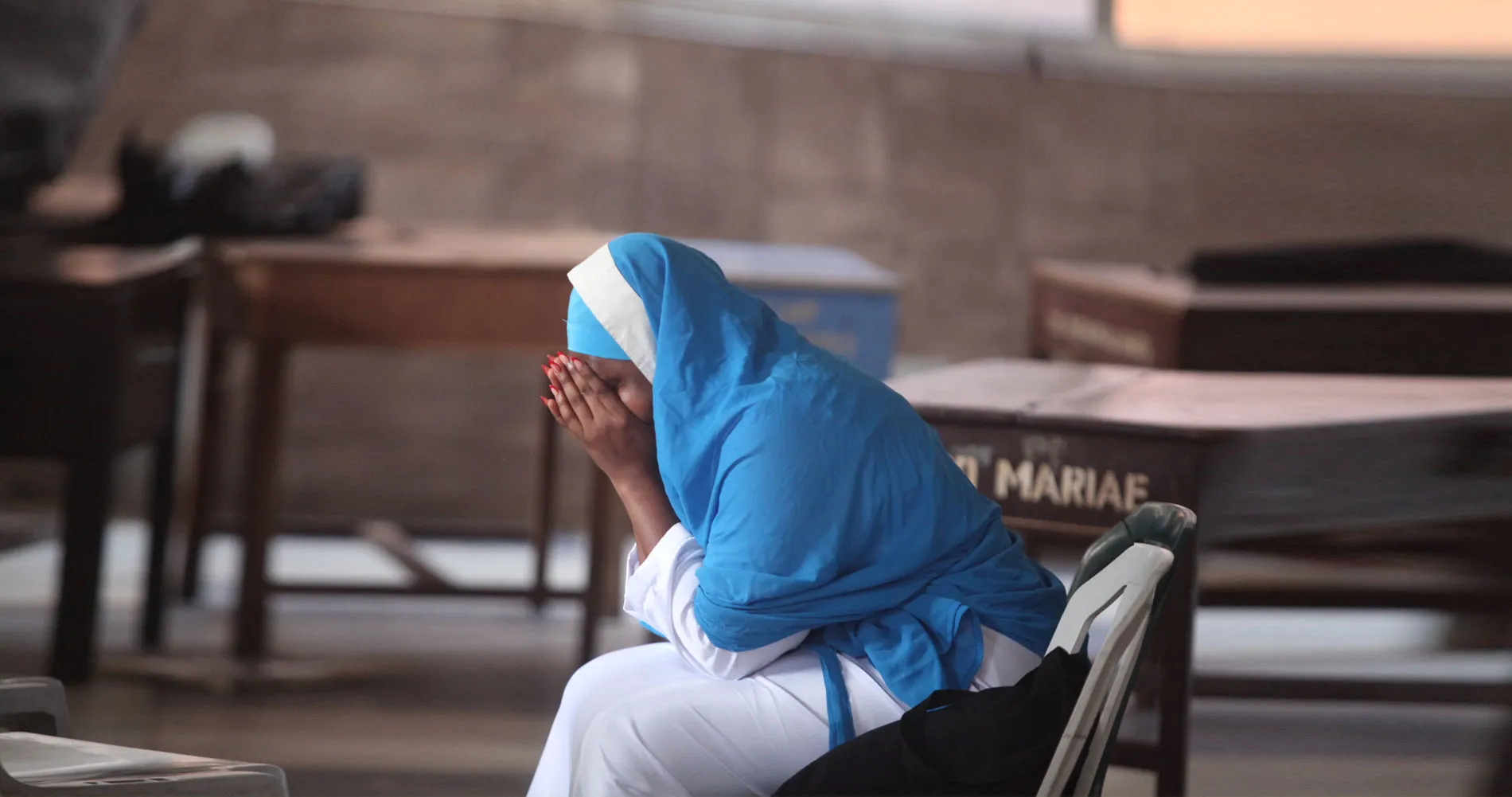
Pope Leo XIV condemned the killing of 200 people in Yelwata, Nigeria, on the night of 13 June 2025. The victims of the brutal killing had been sheltering in a local Catholic mission. Amnesty International Nigeria called on Nigerian authorities to “immediately end the almost daily bloodshed in Benue State and bring the actual perpetrators to justice”.
Nigeria, Africa’s most populous nation where 48% of the people are Christians, has drawn global attention as accusations of systematic violence against Christians resurface. US politicians and religious-freedom groups claim that attacks on Christian communities have gone unchecked for years. Nigerian officials reject that narrative, calling it politically motivated and detached from the realities on the ground.
US Republican Senator Ted Cruz accused Abuja of allowing or enabling the mass killing of Christians. On 9 October 2025 Cruz said, “Nigerian Christians are being targeted and executed for their faith by Islamist terrorist groups, and are being forced to submit to sharia law and blasphemy laws across Nigeria.” His proposed Nigeria Religious Freedom Accountability Act would reinstate Nigeria on Washington’s list of “countries of particular concern.” Other US lawmakers also demand action.
Nigeria was first listed as a “Country of Particular Concern” in 2020 under the first Trump administration but was removed a year later by Joe Biden. Now, voices in the US Senate and the Congress – among them Senator Jim Risch and Senator Josh Hawley – are again urging Washington to restore the designation while Congressman Riley Moore describing Nigeria as “the deadliest place in the world to be a Christian.”
Nigerian officials countered that such accusations distort a complex conflict. In direct response to Cruz’s remarks, Daniel Bwala, special adviser to Nigerian President Bola Ahmed Tinubu, told France 24 that the genocide narrative was a “politically motivated fabrication.” He accused the Nigerian NGO Intersociety—often cited by US politicians—of publishing inflated figures driven by “foreign-funded agendas.” According to Bwala, the wave of Western criticism coincided suspiciously with Nigeria’s diplomatic positions at the United Nations in September 2025, where Abuja called for peace and a two-state solution to the Israel-Palestine conflict. Moreover, the Minister of Information and National Orientation, Mohammed Idris, dismissed the Senator’s claims as “misleading, exaggerated, and not reflective of reality,” adding that it was “absurd and unsupported by any credible evidence” to suggest that tens of thousands of Christians had been killed or that 20 000 churches had been burned.
To understand the dispute, it helps to look back. Nigeria’s insecurity crisis has been building for more than two decades. Boko Haram, a group designated as a terrorist organization by Nigeria and the US in 2013, launched its insurgency in the late 2000s. While it first targeted Christian institutions, its violence soon spread to Muslim communities and anyone who challenged its authority. 2009, according to Intersociety, Boko Haram’s campaign marked the beginning of a cycle of destruction that has since seen an estimated 1200 churches attacked annually—about 19 100 in total over the past 16 years. Boko Haram’s offshoot, the Islamic State–West Africa Province (ISWAP), remains active across the Chad Basin, attacking civilians, aid workers and soldiers alike.
Today, the violence has spread far beyond the northeast, concentrating in the Middle Belt—the vast region between Nigeria’s predominantly Muslim North and Christian South, home to hundreds of ethnic minorities. Here, much of the bloodshed stems from the long-running farmer–herder conflict, whose roots stretch back to pre-colonial times. Once local disputes over grazing routes and farmland, these clashes have intensified in recent decades as rising desertification and shrinking pastures push Fulani herders -mostly Muslim nomadic pastoral community-southward into farming areas of predominantly Christian groups. The competition for land and water has taken on an increasingly ethno-religious dimension, fueling cycles of retaliation that have devastated entire communities and displaced hundreds of thousands.


Abuja argues that portraying these clashes as the persecution of Christians alone obscures the wider picture. Both Christian farmers and Muslim herders, the Nigerian Government says, are victims of a broader security collapse worsened by poverty, climate stress, populations growth and weak governance. Nigeria’s 2025 estimated population of 237 million is projected to rise to 401 million by 2050.
Yet the scale of reported killings continues to draw global alarm. Intersociety’s latest report, published on 10 August 2025, claims that at least 7087 Christians were killed across Nigeria in the first 220 days of 2025—an average of 32 per day. Since 2009, Intersociety estimates that roughly 185 000 Nigerians have been killed, including 125 000 Christians and 60 000 Muslims identified as “liberal” or opposed to jihadist ideology. The organization attributes the violence and abductions – nearly 8000 Christians kidnapped in the same period – to about 22 jihadist groups now active in Nigeria.
While Nigerian officials warn that such rhetoric oversimplifies a national emergency that affects citizens of all faiths. Statistics don’t lie: although both Christians and Muslims fall victim to these extremist groups – it is the Christian minority in Nigeria which is being targeted more often. According to the Observation for Religious Freedom in Africa data of civilians killed, Christians are more likely to be killed by extremist Muslims in northern Nigeria by a factor of 6.5. Terror groups like Boko Haram, ISWAP (Islamic State West Africa Province) and Fulani militants have consistently and explicitly targeted Christians.
Nigeria is clearly a very dangerous place to be a Christian.