
The Minnesota fraud scandal is one of the largest fraud schemes in US history. Minnesotans, most of Somali descent, ripped off an estimated USD 9 billion in taxpayer funds meant to feed children, provide housing for low-income and disabled Americans, and deliver critical healthcare to the vulnerable. The House Committee has now determined that Governor Tim Walz and his Attorney General Keith Ellison were not only aware of the scheme, but also lied to Americans about it.
Silvia Caschera
1 April 2026
Since late 2025, Minnesota has found itself in the middle of what could be one of the biggest public-benefits fraud scandals in US history, with federal prosecutors warning that billions of dollars may have been drained from Medicaid through large, organized fraud schemes. The case has quickly become politically and socially explosive, in part because many of those charged are members of Minnesota’s Somali community. So far, investigators have charged more than 90 people, 82 of whom are of Somali descent, which has fueled political attacks and suspicion toward the community. Somali leaders and many officials, however, emphasize that these crimes are the actions of specific individuals and should not be used to stigmatize a community of more than 80 000 Somali Minnesotans.
Let us be clear: this investigation has nothing to do with Republicans v. Democrats. Minnesota’s lawmakers and executive and Congressional representation are Democrat. Ilhan Omar, Congresswoman (D) for Minnesota, is herself under investigation and has sharply criticized the Trump administration.
What many do not know is the scandal dates back to 2021, when Biden administration Justice Department investigators first prosecuted a COVID-era scam of at least USD 250 million in Minnesota. The Biden Administration focused on The Feeding Our Future program. Already in March 2025, a federal jury convicted two individuals for their roles in the USD 250 million fraud scheme that exploited a federally-funded child nutrition program. Since then, 79 people have been charged, with most pleading guilty (56) or being convicted at trial.
On 20 March 2026, five people who stole USD14.6 million in Federal Child Nutrition Program money meant to feed hungry children during the COVID-19 pandemic, pled guilty to wire fraud. More prosecutions will occur as the investigation progresses. There is no denying that the defendants are of Somali descent.
Somali Minnesotans, most of whom live in Minneapolis and St. Paul, form an important and active voting bloc, particularly in Democratic-leaning districts. Over the past decade, Somali American candidates have won local offices, and community organizations have influenced debates and decisions on education, social services, and immigration. State officials knew that a broad crackdown on Somali-owned providers could be viewed as politically motivated, which added pressure and scrutiny to how they responded. In December 2025, President-elect Donald Trump, seized on the cases to attack Minnesota Democrats and the Somali community, but Somali leaders repeatedly stressed that the wrongdoing of a small number of people must not be equated with the community as a whole.
The schemes themselves involved a mix of local providers, some operating multiple shell companies, as well as “fraud tourists” from outside Minnesota who temporarily set up fake businesses in the state solely to tap into public funds. The fraud cut across several Medicaid-funded services, including autism therapy, housing support, and personal care assistance. In practice, the methods were straightforward but blatant: companies billed Medicaid for services that never happened, listed fake clients, or claimed hours of care that would have been physically impossible to provide. Some paid beneficiaries to sign false documents in exchange for cash or gifts, and in extreme cases, entire companies existed only to collect public money and spend it on luxury goods or international travel. Federal prosecutors say this was not a handful of bad actors but a systemic pattern: they estimate that certain high‑risk programs billed about USD18 billion since 2018, with at least half potentially fraudulent, a figure they have called staggering and unprecedented.
Governor Tim Walz (D) has defended his administration by arguing that the state did not have the information it needed to act earlier. He says federal investigators withheld key evidence, so Minnesota had to act without the information it needed, even while it was being criticized for not doing enough. John Connolly, the state’s Medicaid director, maintains that although tens of millions of USD in fraud have been documented, the much larger estimates from federal prosecutors cannot be confirmed without access to federal data.
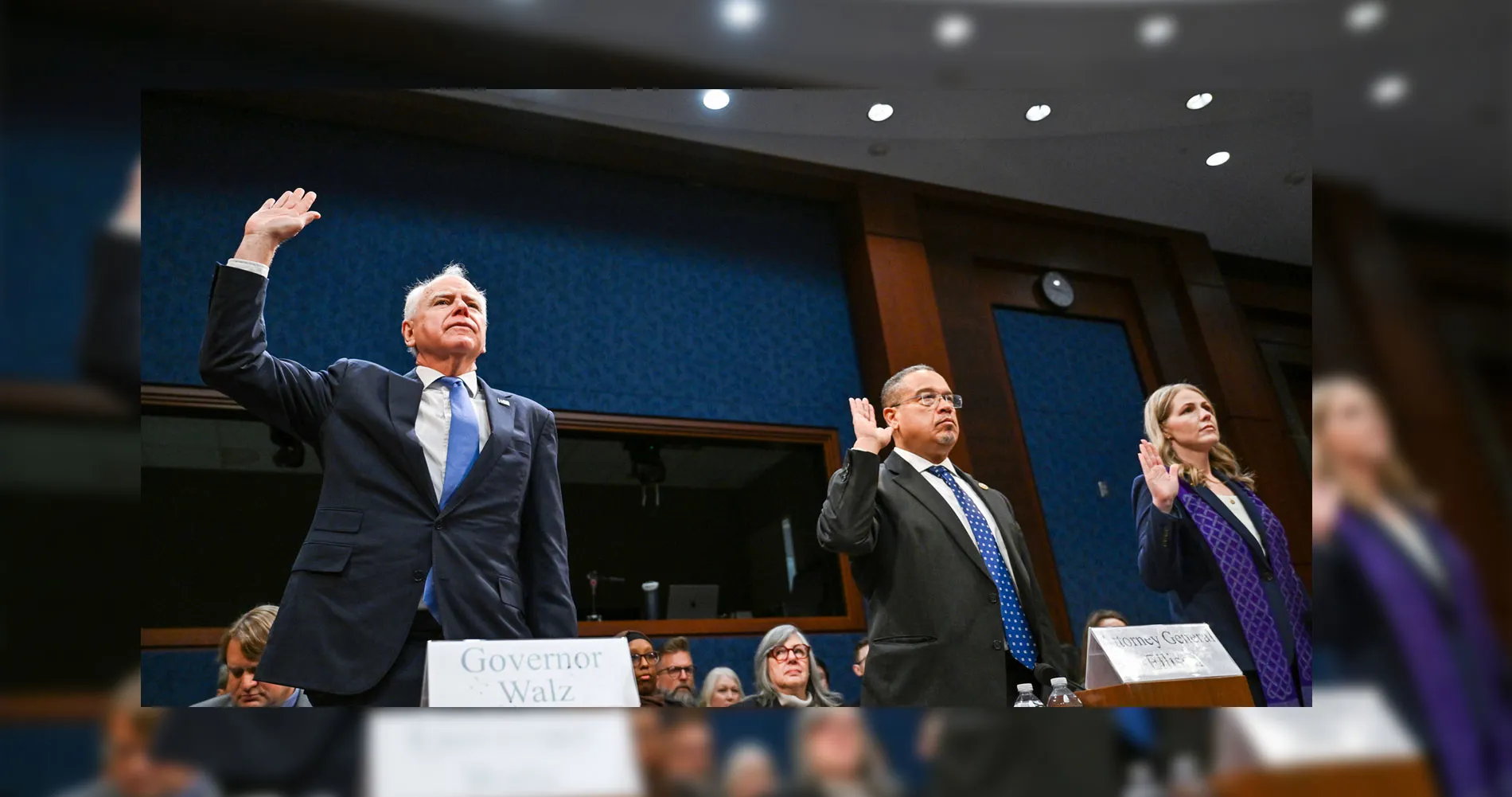
On 4 March 2026 the House Committee on Oversight and Government Reform held a hearing titled “Oversight of Fraud and Misuse of Federal Funds in Minnesota: Part II.” The Committee continues to investigate how criminals in Minnesota ripped off an estimated USD 9 billion in taxpayer funds meant to feed children, provide housing for low-income and disabled Americans, and deliver critical healthcare to the vulnerable. The congressional investigators found that Minnesota Governor Walz and Attorney General Ellison lied about knowledge of fraud and silenced whistleblowers. Walz and Ellison were aware for years of widespread fraud in social service programs, lied to Americans about their knowledge of fraud, retaliated against state employees who raised concerns, and failed to take meaningful action. Whistleblowers who brought this fraud to Walz’s attention were told not to pursue it because it could be viewed as racist.
The conditions which allowed the fraud to perpetuate for years were facilitated by Minnesota’s Department of Human Services which is responsible for overseeing thousands of providers. Although this department has a relatively small auditing staff, which means reviews are slow, backlogged, and lack real‑time data tools to spot suspicious billing, this does not excuse their inaction in this fraud case. During COVID, temporary rule changes reduced paperwork requirements and in‑person checks. This made it easier for people/companies with criminal intent to bill for services that never actually took place. Programs like Housing Stabilization Services also grew very quickly – by almost four times between 2021 and 2024 – so the state had even less capacity to properly oversee them.
Federal prosecutors identified patterns of fraud before the state did but did not immediately share detailed evidence, making it hard for state officials to halt payments in time. State Inspector General James Clark said the federal estimates were shocking and argued that, if Minnesota had received the information sooner, it could have stopped many of the fraud schemes earlier. Being ineffective, slow and understaffed does not excuse not fulfilling legal oversight obligations. Governor Walz is arguing he was not able to fulfill his executive duties – but he is the top executive officer of Minnesota, so it begs the question: who else should have discovered and prosecuted this massive year-long fraud scheme in his state if his administration did not do this. The House Committee has now determined that Walz lied to the American people about his knowledge and tried actively to suppress any information of this from getting out.


Under growing public pressure, Minnesota has begun to tighten oversight and improve transparency. The state set up a fact‑checking website to counter false or misleading claims about Medicaid fraud and deployed around 160 staff members to revalidate nearly 6000 providers. It is also developing an automated pre‑payment review system designed to flag questionable claims before money goes out the door. According to state officials, these efforts have already identified more than USD 52 million in payments that might be recovered. Walz has presented these steps as a more forceful strategy for detecting and preventing fraud, signaling a shift toward far stricter oversight.
Overall, Minnesota’s Medicaid fraud scandal exposes several layers of failure: weaknesses in program design, inadequate oversight, poor coordination between state and federal authorities, and shortcomings in political and administrative leadership. The total amount stolen is still being investigated, but the damage to public trust is already evident. For many Minnesotans, the most troubling question is not only how much money was lost, but also how a state known for generous social programs allowed such widespread abuse of systems meant to support its most vulnerable residents. The case is a stark reminder that even well‑funded, well‑intentioned programs can be misused if oversight is weak and lines of coordination are poor.
Ultimately, the Minnesotan and US tax payers will pay the bill for this complete failure of Walz’s administration. On 12 January 2026, Republican Minnesota Representative Mike Wiener drafted the paperwork to impeach Walz for his failed fiduciary responsibility to taxpayers in this unfolding USD 9 billion Somali social services scandal. An interesting and depressing additional point: Governor Walz was the Democrat’s Candidate for US Vice President in the November 2025 US national elections.