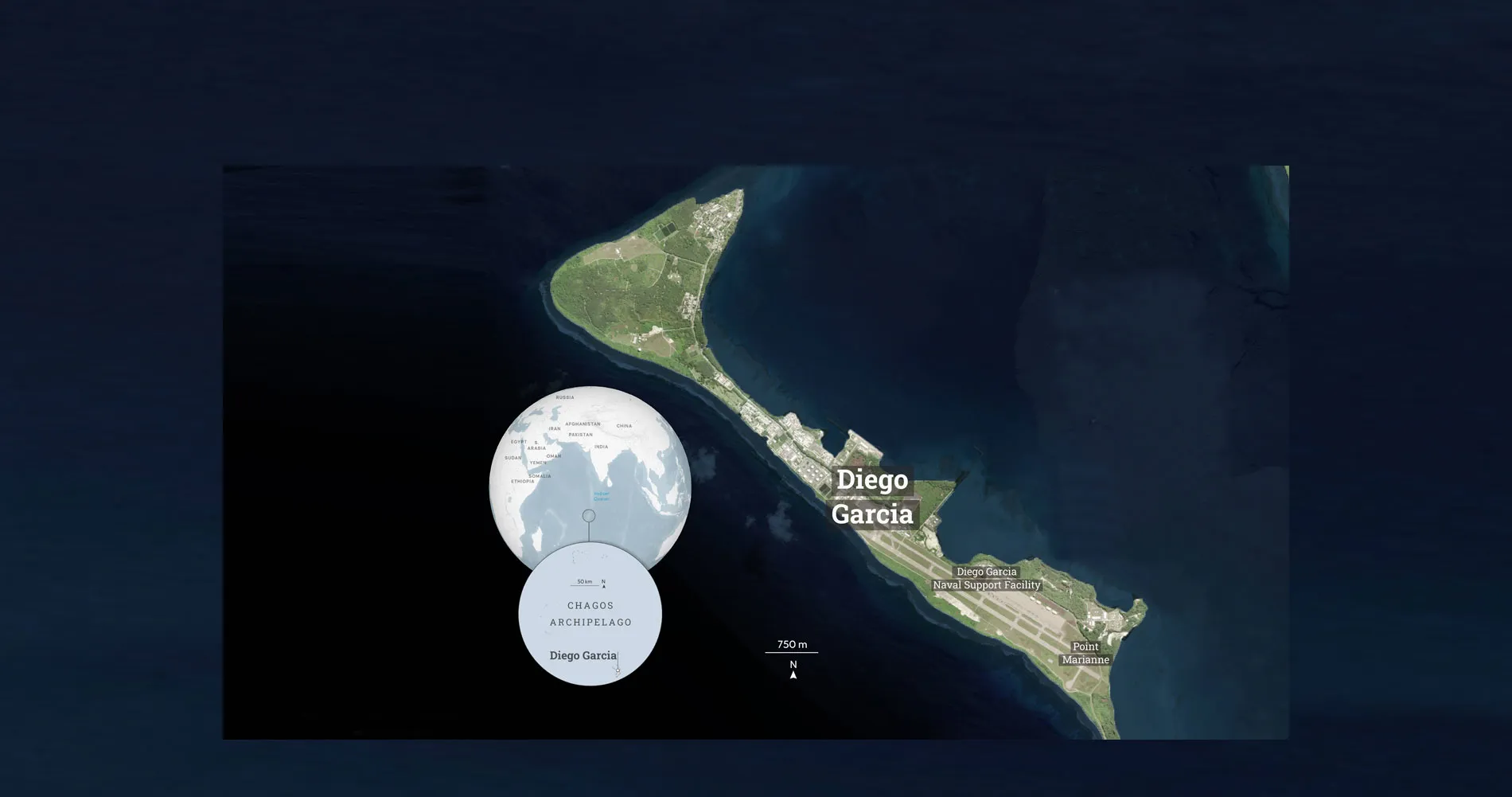

Since the 2024 US Presidential election, Greenland and the Arctic are a main focus of attention. The new US administration has declared its strong intention to acquire Greenland for national security reasons. US interest in Greenland dates back to WWII. While many experts and analysts have ascribed this national security reasoning to natural resources and new shipping routes, few have mentioned the interdependence between developments in the Arctic and developments in outer space.
Pierre-Etienne Courrier
7 January 2026
The increased investments by the US, China and Russia in the Arctic illustrate their strategy to securitize outer space and terrestrial military operations that depend on satellite technology. The race to control the high north is on. While cooperation between the Arctic players remains, the geopolitical competition among the Arctic powers will shape the future of the region and those who live there. Greenlanders are feeling this pressure and there is no sign that the US will give up on its ambition for the Arctic island
Greenland has been at the center of European affairs and exploration for centuries. It is believed that Erik the Red was the first European to set foot on the Island in the 10th Century and created a first European settlement soon after. But the settlements did not survive past the 15th century, and it is not until 1721 that Denmark sent an expedition to Greenland to establish its colony near present-day Nuuk.
For 212 years, Denmark occupied Greenland until, in 1940, the European country fell to German occupation during World War II, leaving the Arctic Island vulnerable despite its critical meteorological role and strategic location. In April 1941, Denmark and the United States signed an agreement for the defense of Greenland allowing them to build defense capabilities on the island. Published literature by military officers of the time suggest that the US considered Greenland critical for WWII, but also for future strategic advantage and national security reasons.
The United States built numerous military bases and operated countless weather stations with allied forces in Greenland during WWII. In 1946, the US government offered to buy Greenland for USD 100 Million which was rejected by Denmark. In 1951, the two countries signed a new defense agreement for Greenland under the auspices of NATO. To this day, the US has also been allowed to retain Pituffik base (formerly Thule) located in the Northwest of the island.
During the Cold War, Greenland and the Arctic became strategic areas of contention, especially in the context of nuclear deterrence. Today, with an increasing number of actors involved and interested in the area, the Arctic has increased in strategic value. President Donald Trump’s desire to acquire Greenland has reignited this conversation.
The Arctic is suspected to hold close to 10% of known petroleum reserves and around 22% of the world’s remaining undiscovered oil and gas reserves. While mining and extraction is challenging due to the conditions of the region, various actors, including Russia and China, are actively looking for ways to exploit those resources.
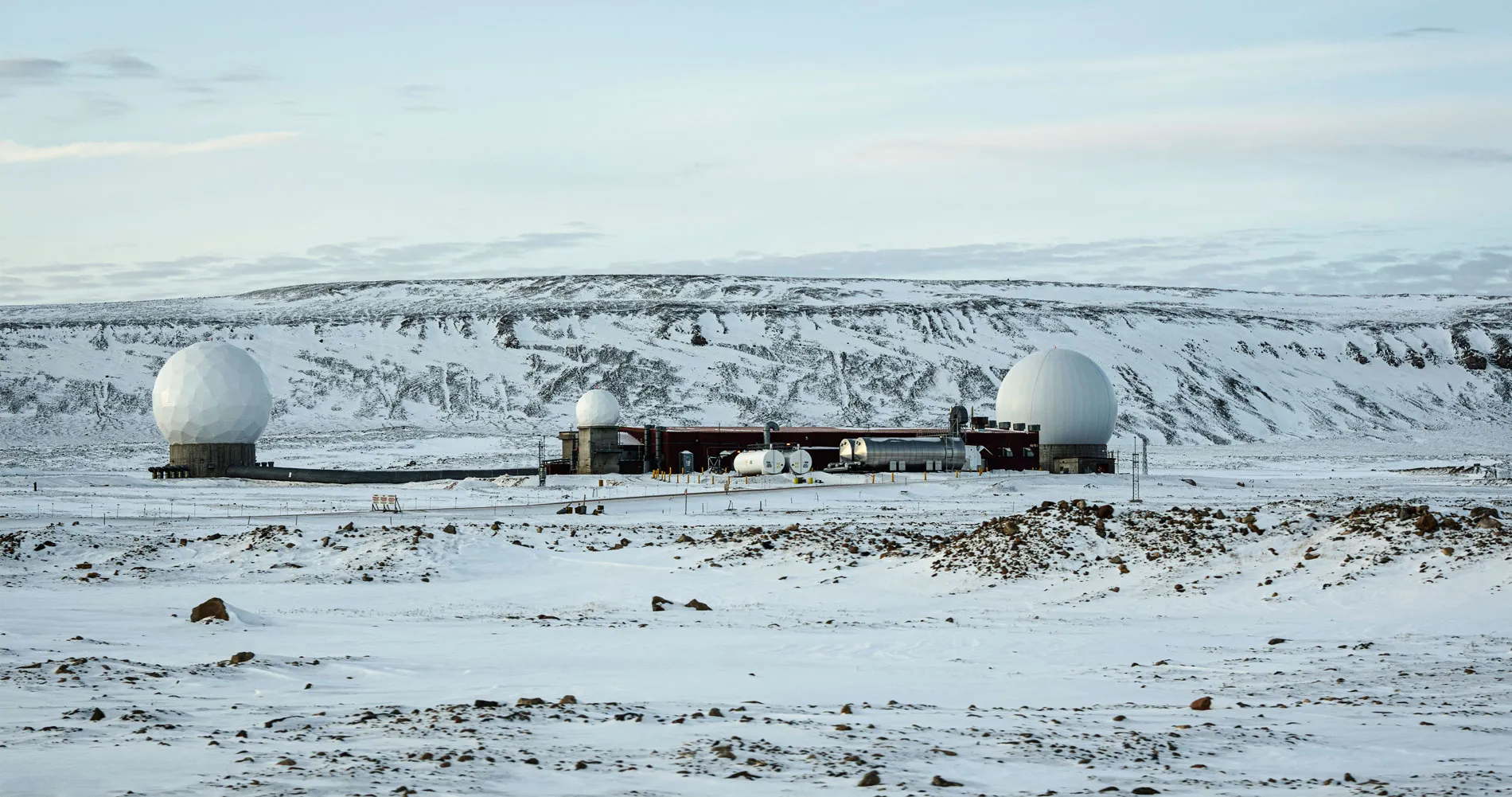
The melting ice is creating new strategic shipping lanes through the Bering Strait. However, beyond shipping lanes and natural resources, the Arctic is also critical for developments in outer space. The Arctic, including Greenland, is housing numerous satellite ground stations that are vital for polar-orbiting and sun-synchronous satellites. These stations, which establish communication with satellites through the transmission and reception of radio waves, are essential for space operations, modern space-based surveillance, weather monitoring, tracking, reconnaissance, as well as early warning of missile launches. They are a critical part of the success of an military operation in the world which relies on satellites. Additionally, Arctic and near-Arctic launch capabilities are being developed.
Numerous states, including the United States, Russia, and China are actively competing in developing Arctic capacities and capabilities for Outer Space in the hope of strengthening their standing in the race to new frontiers.
The United States is increasingly linking the Arctic and Space in its most recent Arctic Strategy. The Strategy has three priorities. Enhance the Joint Force’s Arctic Capabilities through investments in space capabilities for example, strengthening intelligence, surveillance and reconnaissance (ISR) capabilities. Engage with allies partners and willing nations. And finally Exercise presence in the region. The strategy clearly outlines the need for greater investments in the Arctic (and space capabilities) to protect US homeland and US military operations.
In the hope of increasing domain awareness, the US also operates Pituffik Space base in Northern Greenland as the only US space force base outside of the continental United States. Pituffik, and the Clear Space Force Station in Alaska, work on missile warning, missile defense, and space surveillance. Additionally, Alaska and the Canadian Arctic have hosted multiple North American Aerospace Defense Command Stations.


Confirming these developments, John Bentivegna, Chief Master Sergeant of the US Space Force stated in 2023 that “we must fortify [our presence in the Arctic] and ensure we capitalize on our unique position at the top of the world to safeguard our interests.” The interest of the US administration in Greenland underlines the importance of the Arctic for its foreign policy and military strategy.
The Arctic is also critical to the Russian economy and its space sector. It holds multiple ground stations in the region for satellites as well as several launch sites near the Arctic. Additionally, Russia operates dozens of Arctic military facilities, 17 deep-water ports, and is presumed to have engaged in air incursions, global navigation satellite system jamming, and electronic warfare operations in the region.
Additionally, Russia holds the largest fleet of nuclear-powered ice breakers (46 estimated with 11 under construction) which significantly enhance navigation in the Arctic waters and has prompted a regional race for these vessels. The US, Canada, and Finland signed the Icebreaker Collaboration Effort in July 2024 in attempt to catch up while China commissioned its 4th polar-capable vessel in 2024. In the meantime, Russia has already trialed its first armed combat icebreaker in 2024. The Ivan Papanin is the first icebreaker of the Russian Navy and has vehicle carrying capabilities.
China, which declared itself as a near-arctic state, is also attempting to increase its presence in the region. Beijing has invested in a fleet of satellite command ships and research stations in the region that some in the West suspect of having the capacity to also be used for military purposes.
For multiple years now, China has attempted to buy land, airports, and seaports in the Arctic (and Greenland). Although unsuccessful due to Western States blocking these investments, they show China’s resolve to actively partake in Arctic affairs. Since 2021, The Chinese Navy has frequently cruised off the Alaskan coast and occasionally, with the presence of Russian vessels.
This race, however, is not simply about developing infrastructure, new satellite ground stations, or launching capabilities in the Arctic. It is also about protecting assets on the ground to ensure that daily military operations across the world, that rely so heavily on satellites, are not at risk or compromised.
As the number of satellite ground stations and data centers for space operations rises, the region becomes increasingly valuable for an increasing number of global actors. However, for the same reasons, this infrastructure has become more vulnerable to present and future threats, targeting, and attacks.
This reasoning leads to increasingly assertive actions by different global powers. Russia and China have started joint military exercises in the region following the release of the new US Arctic Strategy. The United States’ recent bid to acquire Greenland is the latest move guaranteed to increase the geopolitical competition in the Arctic. The race for space starts on the ice.