
Severe drought is tightening its grip across parts of Africa, reflecting a global crisis driven by climate change. As water scarcity intensifies, scientists and engineers are advancing innovative ways to capture, recycle, and conserve this vital resource; offering practical responses to one of the defining environmental challenges of our time.
David Deegan
16 February 2026
In April 2025, the Joint Research Centre within the European Union Science Hub reported that large areas of northern, southern, and central-western Africa, along with northern Madagascar, continue to be gripped by severe drought following two or more consecutive years of below-average rainfall coupled with unusually high temperatures. The prolonged dry spell shows no sign of abating, and is exacting a heavy toll on the environment, crippling agricultural output, depleting water resources, escalating threats to food security across the affected regions.
This event is part of a broader global pattern in which droughts are becoming increasingly frequent and severe due to climate change. In December 2024 the United Nations University Institute for Water, Environment and Health reported that current drought costs already exceed USD 307 billion annually, and that by 2050, three out of four people worldwide could face drought impacts.
In response to mounting water scarcity, scientific and engineering communities are developing and implementing innovative methods to extract, conserve, and recycle water.
“Cloud-milking” involves harvesting water from fog in regions where rainfall is minimal, but mist is common. “Life Nieblas”, a European Union-backed project in the Canary Islands uses mesh structures to capture microscopic water droplets from fog, and subsequently use the harvested water for irrigating reforestation zones.
In the industrial sector, a significant development is the reuse of wastewater produced by oil drilling operations. In states such as New Mexico, the oil industry generates large volumes of what is termed “produced water”; water that comes out of the well along with the crude oil during production. “Produced water” contains non-soluble elements, along with chemicals used in the production process, and has traditionally posed a disposal challenge. Companies such as Aris Water Solutions have invested in treatment technologies that purify this wastewater to a standard suitable for agricultural and industrial reuse. This strategy reduces the environmental burden associated with wastewater disposal and creates an alternative water source for regions experiencing chronic shortages.
The San Francisco Public Utilities Commission’s Onsite Water Reuse Program, for instance, promotes the installation of decentralized systems within individual buildings to treat and recycle “gray” water. “Gray” water refers to domestic wastewater generated in households or office buildings from sources other than toilets. Sources include sinks, showers, dishwashers and laundry facilities. The gray water is filtered and disinfected, and then used for non-potable uses such as toilet flushing and landscape irrigation.
The Epic Cleantec company developed the largest commercial high-rise water-recycling system in the US. Every day, the Salesforce Tower, a 61-storey skyscraper in San Francisco, recycles 30 000 gallons of wastewater every day. Epic Cleantec also developed systems which go one step further, combining water recycling with heat recovery from the wastewater, thereby improving overall building efficiency.
Municipalities in Central Texas, including San Antonio, Kerrville, and El Paso, are operating Aquifer Storage and Recovery (ASR) programs that inject surplus water into underground aquifers during periods of excess supply. The water is stored in geological formations such as the Carrizo-Wilcox and Trinity Aquifers and can be retrieved when surface water availability diminishes. This strategy effectively creates a buffer against seasonal and long-term drought conditions.
Traditional desalination methods, evaporating seawater to leave behind the salt, and then condensing the vapor back into freshwater, often require energy-intensive processes which are expensive and heavily reliant on fossil fuels. They also produce harmful byproducts like brine, a salty waste that can damage marine ecosystems. In response, researchers at the University of South Australia have developed a solar-powered desalination unit that incorporates clay minerals to accelerate the evaporation process, thereby enhancing the system’s efficiency.


Norwegian company Ocean Oasis has introduced a floating desalination plant that uses wave energy to desalinate seawater. This system is fully powered by renewable energy and is intended to provide potable water to coastal communities. The US company TETRA Technologies developed a system, which uses ceramic membranes to desalinate high-salinity water produced during oil and gas operations, thereby enabling water reuse in industrial settings.
Novel techniques which create greater water resources, is only part of the solution. The produced water also needs to be used more efficiently and effectively. Excessive evaporative loss of water from the topsoil in arid-land agriculture is usually compensated via irrigation, which impacts on freshwater resources. Plastic mulches on the topsoil reduce the evaporation, but their non-biodegradability causes fresh ecological problems. Cornell University in the US developed superhydrophobic sand mulches, coated with nanoscale wax to form a barrier that minimizes water evaporation. Field trials have demonstrated that applying a 5-millimeter layer of this mulch can result in crop yield increases of up to 200%.
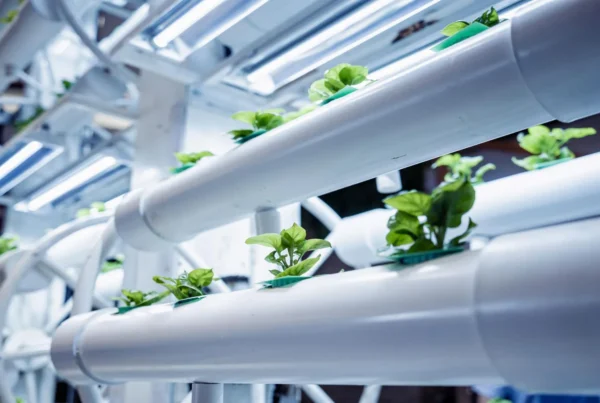
Smart irrigation systems are also making an impact by optimizing water delivery in agriculture. These systems use sensors to monitor soil moisture, weather patterns, and plant health, delivering precise amounts of water directly to the root zones. In trials conducted in Kenya and Ethiopia, the implementation of such systems has led to 50% reduction in the use of water simultaneously increasing crop yields.
The increasing frequency and severity of droughts worldwide necessitate urgent and sustained innovation in water resource management. These new methods and technologies have the potential to mitigate the effects of water scarcity through a combination of novel extraction, recycling, and conservation techniques. The solutions are not panaceas but represent critical steps toward safeguarding water supplies and ensuring the long-term viability of human and ecological systems in a changing climate.