
Quantum computing became one of Russia’s fastest-developing high technology sectors in less than a decade. Despite a late start, the country built national hardware platforms, research institutions, and industrial applications at unusual speed. The result is a rare case of accelerated system formation in a field dominated by early global leaders.
Murat Gibadyukov
18 March 2026
Quantum computing in Russia developed as a state-sponsored technology program with clearly defined strategic goals. From the start, the government treated it as part of critical digital infrastructure rather than an isolated research topic. This choice shaped the entire model of development, with centralized funding, direct state coordination, and long-term planning. As a result, Russia belongs to a limited group of countries with sovereign quantum computing programs, alongside the United States, China, Germany, the United Kingdom, France and Japan.
The Russian quantum policy emerged in 2019, when quantum technologies were introduced into the national program “Digital Economy of the Russian Federation”. One year later, the government launched a dedicated federal project entitled “Quantum Technologies”. Rosatom, Russia’s state-owned nuclear energy corporation and one of the country’s main high-tech agencies, was assigned the role of national implementation and coordination of the digital economy program. This placed quantum computing under the same governance scheme as nuclear energy and space technologies. Instead of relying on fragmented academic grants, Russia built a single national roadmap with unified technical targets and performance quality control parameters
Investments in Quantum Technology-related Activities by Russia and other Major Countries–How Much Russia Invests and What It Buys
According to official data published by Rosatom and Russian government analytical agencies, total public funding for quantum technologies from 2020 to 2024 reached approximately 24 billion rubles, or around USD 311 million (at February 2026 average exchange rate). Rosatom itself provided close to 12 billion rubles. These figures include hardware platforms, software development, education programs and applied pilot projects.
Russia operates on a different financial scale from the other largest global programs. In the United States, quantum research is coordinated through the National Quantum Initiative, a federal program launched in 2018 that authorized about USD 1.2 billion in funding for quantum research over its first five years. New legislation under consideration would expand the program with roughly USD 2.7 billion over the next five years. Germany allocated around EUR two billion between 2020 and 2024. The United Kingdom committed roughly five hundred million GBP for the same period, with long-term plans above eight hundred million GBP. Estimates for China exceed EUR fifteen billion while total public funding across the European Union and its member states surpassed EUR thirteen billion.
The difference in scale remains clear. Yet the structure of Russia’s program follows the same systemic logic as these leading countries. Russia has one national coordinator, one integrated roadmap, and a closed technological loop from research to applications.
What Russia Has Actually Built
The research core of the program centers around a small group of institutions coordinated by Rosatom. The Russian Quantum Center leads experimental research, Skolkovo Institute of Science and Technology focuses on systems engineering, and the `National Research Nuclear University MEPhI develops control and cryogenic technologies. Together, they operate as a single integrated research and engineering unit.
This structure enabled parallel development across four hardware platforms: superconducting qubits, trapped ions, neutral atoms, and photonic systems. These platforms differ in how physical systems represent a qubit, which is the basic unit of quantum information, analogous to a bit in classical computing but capable of existing in multiple states simultaneously. Only a limited number of countries pursue all four approaches on a national scale owing to their technical and financial complexity.
The strongest results appeared in trapped ion and neutral atom systems. In 2024, Rosatom reported 50 qubit prototypes on both platforms. In December 2025, Moscow State University and Rosatom developed a 72-qubit neutral atom system, the third Russian quantum computer above 70 qubits. In practical terms, qubit count measures how many quantum units a machine can control at once, which sets the upper bound on problem size. The prototype uses arrays of single neutral rubidium atoms that are trapped and controlled with laser systems. The computer was developed by researchers from the Faculty of Physics at Lomonosov Moscow State University as part of Russia’s national quantum technology program coordinated by Rosatom.
Experimental tests showed two qubit operations with 94 percent accuracy. This metric, known as gate fidelity, measures how reliably quantum operations produce correct results. High fidelity matters more than raw qubit count, since errors grow exponentially as systems scale. The system uses a three-zone architecture for computation, storage and readout, designed to support future error correction, which is required for stable long-term quantum computation. The system divides quantum registers into three zones. One zone performs calculations, another stores quantum states for a longer time, and the third reads the results of computations. This design helps improve reliability as quantum computers grow larger.
Project leaders aim to reach several hundred high fidelity qubits by 2030. At that scale, systems should support logical operations with built-in error correction and run algorithms beyond the practical limits of classical computers.
In a global context, Russia’s 72-qubit system remains smaller than leading platforms in the United States and China, which exceed 400 to 500 qubits. Japan and Canada operate systems in the range of 200 to 250 qubits. At the same time, Russia stands above many national programs still operating below 50 qubits and remains among fewer than ten countries with stable multi-platform quantum hardware.
Software development followed a similar centralized logic. Rosatom and Sber developed domestic quantum programming frameworks and cloud platforms for remote access to quantum processors. In 2022, Rosatom launched a national quantum cloud service that allowed universities and industrial partners to test algorithms on Russian hardware.


Applied research focuses on quantum chemistry, materials science, logistics optimization and financial modeling. In 2023, Rosatom and Gazprom reported quantum simulations of molecular structures for hydrogen storage materials.
Training the Next Generation
Education remains a critical pillar of the strategy. Since 2020, more than 30 Russian universities introduced degree programs in quantum engineering and quantum information science. According to the Russian Ministry of Science, over 3000 students enrolled in quantum-related programs by 2024.
The 72-qubit project at Moscow State University involves senior researchers, young scientists, graduate students, and undergraduate students, linking education directly to experimental hardware.
According to data from Scopus, a large international database of peer-reviewed scientific publications, and Web of Science, a major index of high-impact research journals, Russia has consistently been among the top ten countries by total volume of scientific publications in quantum technologies over recent years.
Building Under Technological Constraints
Geopolitical restrictions have introduced structural constraints. Russian laboratories lost access to parts of the Western supply chain for cryogenic systems and control electronics. In response, Rosatom and Rostec, Russia’s state-owned defense and industrial technology corporation, launched domestic production programs in 2022. By 2024, Russian teams reported full replacement of key electronic components for trapped-ion and superconducting systems.
When viewed in a global context, Russia does not compete with the United States or China in total funding volume. But it does compete in system formation speed. Russia entered the quantum race later than most leaders, yet compressed institutional development into a single national cycle. Within five years, Russia built sovereign hardware platforms across four technological approaches, established domestic software infrastructure, trained a new generation of specialists, and developed experimental systems above 70 physical qubits. Many countries with larger budgets required more than a decade to achieve comparable structural capacity.
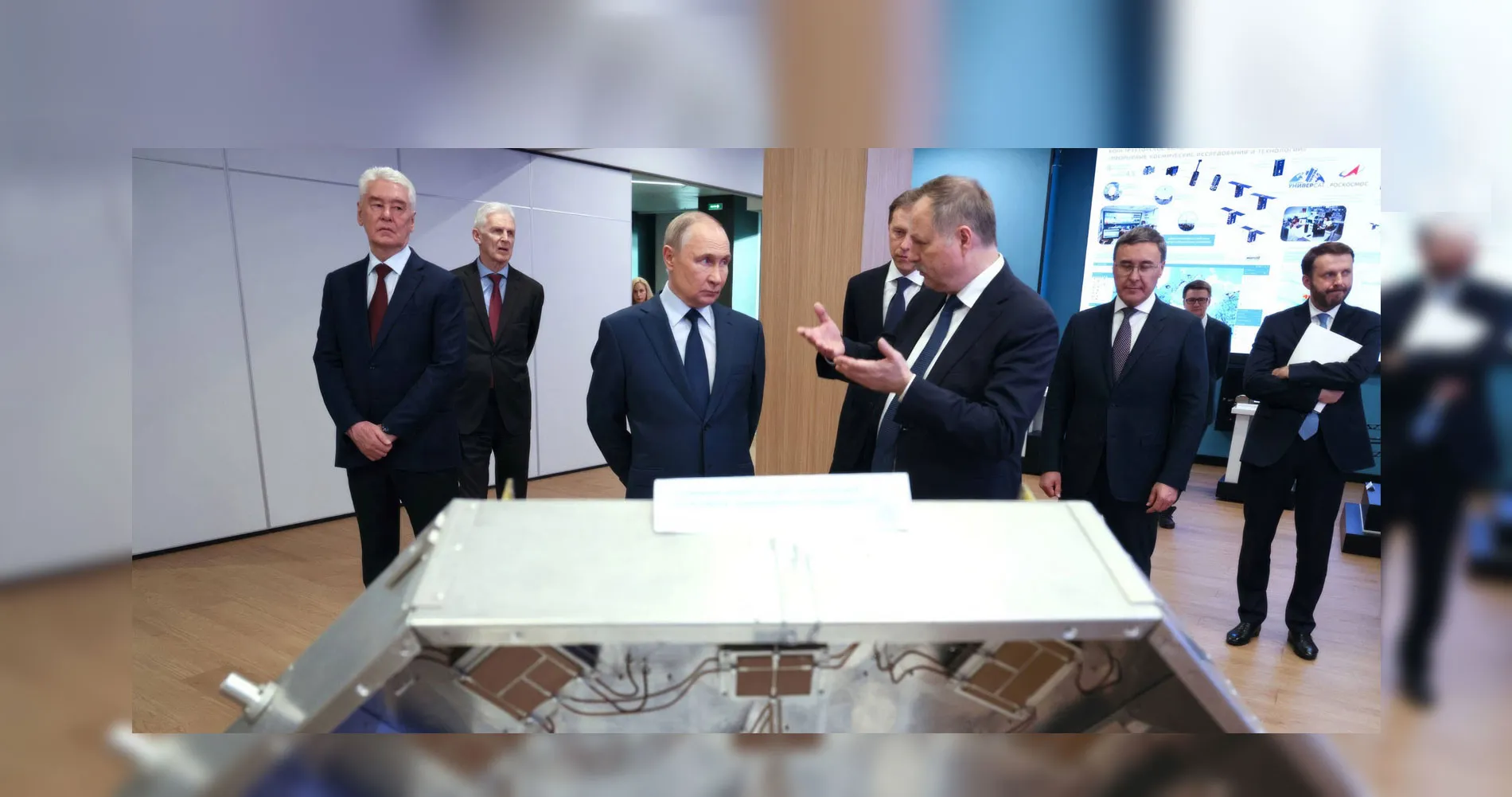
As President of the Russian Federation Vladimir Putin noted, “the quantum world is not in a hurry to reveal its secrets. However, Russian researchers are ready to solve the most complex scientific problems and pave the way towards creating advanced technological solutions.”
The implication is clear: Russia’s quantum computer program represents a case of late entry combined with rapid advances. While it does not define the technological frontier, it demonstrates one of the highest rates of institutional acceleration and achievements in quantum technology among major economies.