
Forests underpin climate stability, biodiversity and livelihoods, yet global demand for everyday commodities continues to drive their destruction. The EU’s Deforestation Regulation (EUDR) aims to break this link, forcing businesses to prove deforestation-free supply chains. Delays, complexity and looming penalties raise pressing questions for companies worldwide.
Bruce McMichael
18 February 2026
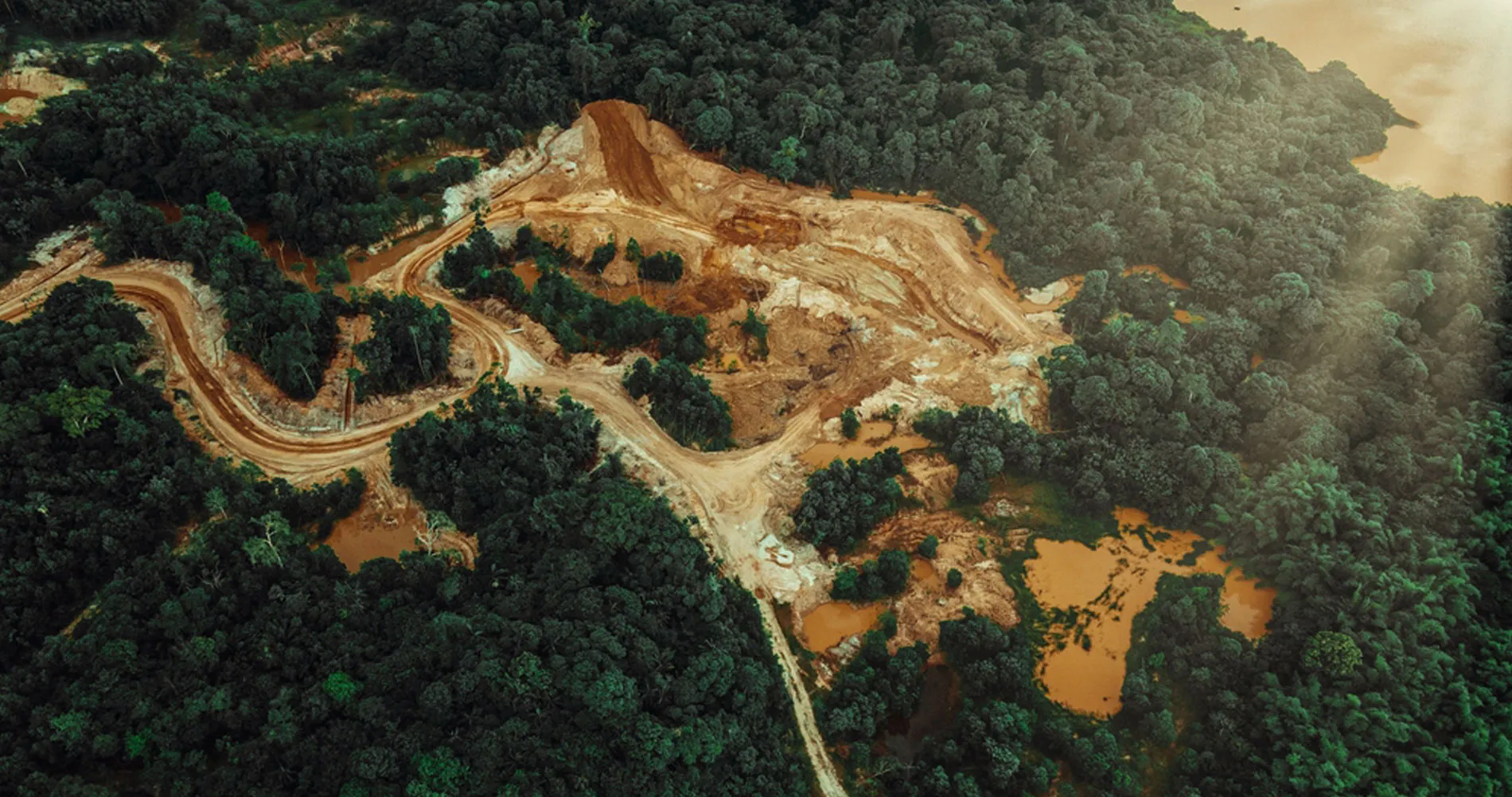
According the WWF, in 2024 “the world lost 16.6 million acres of tropical primary rainforests, equivalent to a rate of 18 soccer fields per minute. The primary causes of forest degradation are logging activities, livestock grazing, and the construction of roads.”
In the EU, as in many other first world economies, deforestation is driven by a growing demand for products such as cattle, cocoa, coffee, palm oil, rubber, soy and wood. The EU is now pushing forward with the implementation of legislation to reduce member states’ impact on deforestation. Adopted in 2023, the EU Deforestation Regulation (EUDR) requires businesses to demonstrate that products they sell or export to the EU do not come from land that was recently deforested or degraded. The legislation focusses on businesses whose operations directly affect forests and their associated projects.
For producers and suppliers of composite products such as chocolate (those made of several ingredients), the EUDR requires due diligence only for the main commodity group. For example, a chocolate bar contains cocoa powder, cocoa butter and palm oil, but due diligence is only focusing on cocoa products.
After several delays largely because the IT system for compliance was not ready and businesses (especially smaller ones) have struggled with its complex requirements, the legislation, which was due to come into force on 30 December 2025, has now been postponed until 30 December 2026. Large businesses must comply from that date forward, while micro and small businesses have a further six months (until 30 June 2027) to get paperwork and compliance in order. Failure to fulfil could result in companies facing financial penalties of up to 4% of annual EU turnover, confiscation of goods, exclusion from public procurement and EU funding, or a temporary ban on trading certain commodities.
In order to cut red tape for European companies, the EU Parliament requested a simplification review by 30 April 2026 to assess the law’s impact and administrative burden. The Commission, according to its own estimates, believes that that this simplification would lead to a 30% reduction in administrative costs and burdens for companies. The latest changes, voted in by MEPs on 24 November 2025, will also reduce the obligations for micro and small primary operators, who will now only have to submit a one-off, somewhat simplified declaration.
The United Nations Food and Agriculture Organization (FAO) estimates that between 1990 and 2020, 420 million hectares of forest were lost to deforestation. “EU consumption is responsible for around 10% of global deforestation. Palm oil and soya account for more than two thirds of this”.
While the UK plans to introduce similar legislation, the UK Forest Risk Commodity Regulation, no dates have yet been released about any timing of enactment. With the UK Parliament primarily engulfed with the fallout from the Epstein scandal, it remains to be seen if Prime Minister Starmer will be able to push forward with this new legislation anytime soon.
INTERPOL, the world’s largest international police organisation, launched its third phase of the Law Enforcement Assistance Programme to Reduce Tropical Deforestation (LEAP) during the United for Wildlife conference in Rio de Janeiro in November 2025. Supported by Norway and UNODC, LEAP will focus on illegal logging, trafficking and mining in Brazil, Ecuador, Indonesia, Papua New Guinea, and Peru – especially in the Amazon Basin – as a major cause of deforestation.


The Intergovernmental Panel on Climate Change (IPCC), the United Nations body that assesses the science of climate change, has found that halting deforestation and restoring ecosystems are among the most efficient ways to reduce CO2 levels and thus fight climate change.
The European Commission and INTERPOL have a long-standing relationship on law-and-order issues, with LEAP being the key tool for tackling illegal deforestation. Sharing intelligence, identifying serious criminals and high-risk companies, and databases are all part of this close relationship, and will in future support enforcement of the EUDR.
The EUDR aims to ensure that a set of key products traded and consumed in the EU and globally no longer contribute to such deforestation and forest degradation. The legislation will be enforced by each EU Member State. The national competent authorities will be responsible for checking operators and traders, with support from customs at entry points. The whole process is overseen by European Commission officials.
This legislation is an opportunity for the EU to play an important role in reducing its presence and impact on global deforestation and biodiversity loss, through creating deforestation-free supply chains, while supporting European businesses. It also follows a commitment made by the 144 signatory countries of the 2021 Glasgow Leaders’ Declaration on Forests and Land Use. The Declaration was a landmark, non-binding agreement at COP26 where signatories pledged to halt and reverse deforestation and land degradation by 2030.