
Saudi–Iranian relations have rarely been stable for long. Proximity and shared regional stakes sit alongside deep differences in religion, state identity, and strategic alignment, differences that repeatedly turn ordinary disputes into geopolitical tests of strength. The 2023 China-brokered restoration of diplomatic ties between the two regional powers opened a new channel for de-escalation, and relations have improved compared to the rupture years. The question now is whether this is the start of a genuine partnership, or simply a more carefully managed rivalry.
Aly Mahmoud and Benedict Burtscher
4 February 2026
German version | Spanish version
The roots of the Saudi–Iranian conflict run deep. Long before the 1979 revolution in Iran, ties were repeatedly strained by questions tied to religion and the management of pilgrimage, issues that could turn symbolic disputes into state-level crises. After 1979, however, the rivalry took its modern form: Iran’s revolutionary project and Saudi Arabia’s role as a Sunni monarchy anchored in a U.S.-backed Gulf security order came to be seen as competing models of legitimacy and regional leadership. Even oil has not been neutral ground–both joined OPEC at its founding in Baghdad in 1960, yet prices and production have often fueled their rivalry. The most recent rupture came almost ten years ago. On 3 January 2016, Saudi Arabia severed diplomatic relations with Iran after attacks on Saudi diplomatic premises in Tehran and Mashhad following the execution of Shi’ite cleric Nimr al-Nimr. The break deepened during a period in which the two powers were already confronting each other indirectly across the region, including in Yemen.
A shift came on 10 March 2023, when the two sides agreed in Beijing to restore diplomatic relations under Chinese mediation. Embassies and diplomatic missions reopened later that year, reviving official channels that had been cut since 2016. Follow-up has continued. On 9 December 2025 Saudi Arabia, Iran and China met in Tehran for the third session of their trilateral joint committee to review implementation of the Beijing agreement and reaffirm commitments on sovereignty, good-neighborliness and international law.
China’s role reflects more than diplomacy. It is now Saudi Arabia’s largest trading partner, and UN Comtrade data for 2024 puts Chinese exports to the kingdom at around $50 billion. Riyadh’s growing economic reliance on China has not replaced its security foundations, however. The United States remains Saudi Arabia’s key security partner, and in May 2025 Washington announced what it described as a nearly $142 billion defense sales agreement with the kingdom. Taken together, this helps to explain Saudi Arabia’s approach to Iran. It seeks to lower tensions where it can, keep deterrence in place where it must, and avoid moves that would force an all-or-nothing choice between major powers.
That same logic extends to global platforms including BRICS, and it offers a clear snapshot of how differently Saudi Arabia and Iran are positioning themselves on the world stage. In August 2023, the bloc invited both to join. Iran moved quickly and is widely treated as having joined with the January 2024 expansion, using the group as part of a broader effort to widen its economic and diplomatic space under Western pressure and to deepen ties with China and Russia. Saudi Arabia, by contrast, has kept its position deliberately open. Saudi officials have said the kingdom has not yet formally joined BRICS and is still weighing this step, although the BRICS website lists Saudi Arabia among its members.
Yet the hardest issues have not disappeared, and Yemen remains the clearest test. For Riyadh, it is not an abstract regional file but a direct security threat that put Saudi cities, airports and energy infrastructure within range of missiles and drones, and where any promise of “de-escalation” is measured in concrete terms. For Tehran, Yemen has long offered influence through partners on the ground and a way to pressure Saudi Arabia without direct confrontation, but that leverage comes at a cost. It is no coincidence that Yemen resurfaced in follow-up talks on the Beijing process, including the third Saudi–China–Iran trilateral committee meeting in Tehran on 9 December 2025, which again pointed to a UN-led political solution.
The war on Gaza also played an important role, sharpening public sentiment across the Arab world and briefly narrowing the distance between Riyadh and Tehran as both emphasized the Palestinian cause and condemned Israel’s actions. But the crisis did not stay confined to Gaza. In June 2025, Israel struck Iran. The Gulf Cooperation Council publicly condemned the attacks on Iranian territory while calling for restraint and diplomacy, a stance Iran noted and welcomed as politically significant. Days later, the United States directly struck three of Iran’s main nuclear sites, according to reports from Reuters and the IAEA, marking a dramatic escalation that underscored US capability and willingness to act.
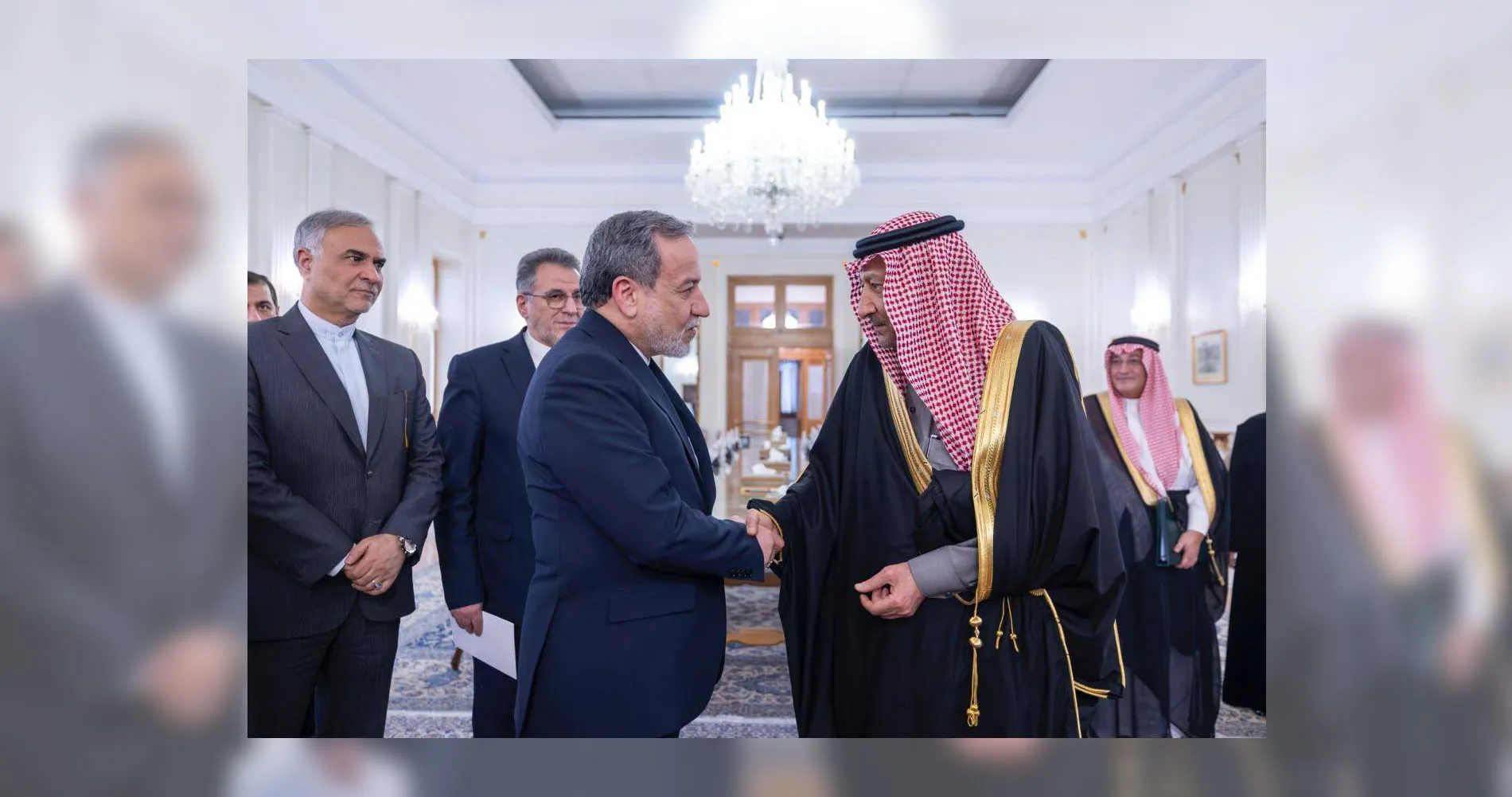
The strikes also appeared to push Iran towards a more pragmatic Gulf track. Under intensified pressure, Tehran increasingly saw better ties with Gulf neighbors, especially Saudi Arabia, as a strategic necessity rather than an option. In July 2025, Saudi Arabia’s foreign minister received a written message from Iran’s foreign minister Abbas Araghchi, delivered via Iran’s ambassador in Riyadh to Saudi Deputy Foreign Minister Waleed Al-KhuraijiThis message focused on strengthening bilateral relations. At the same time, the Gaza war continued to narrow the political space for Saudi–Israeli normalization.


Then, in early January 2026, the pressure on Tehran shifted from external strikes to internal stability. Protests that flared in late December 2025 over inflation and a collapsing currency expanded into the largest unrest in years, with reports of mass arrests and deaths as security forces moved to contain the demonstrations. Washington and Israel moved quickly to frame, amplify, and politicize the unrest. In Washington, the response was unusually direct: on 13 January 2026, President Donald Trump urged Iranians to “KEEP PROTESTING” and wrote “HELP IS ON ITS WAY,” and days later on 15 January 2026, the US announced sanctions against senior Iranian officials linked to the crackdown.
For Saudi Arabia, neutrality is difficult because the spillover risk lands directly on Saudi territory and Saudi markets. Riyadh (along with Qatar, Oman, and Egypt) reportedly pushed Washington to avoid a military strike, warning that escalation could destabilize the region and hit both security and economic conditions, while also cautioning Tehran that retaliating against US facilities in the Gulf would damage Iran’s regional relationships. Saudi Arabia also signaled it would not allow its land or airspace to be used as a platform for an attack on Iran, a message aimed at lowering immediate Iranian threat perceptions and also at protecting Saudi infrastructure from becoming a target.
So, have relations genuinely improved? Compared to the rupture years, yes. Diplomatic channels are open, crisis communication is easier, and the Beijing agreement has proven durable enough to survive repeated regional shocks. But improvement is not the same as reconciliation, and the January-February 2026 unrest in Iran only raises the stakes by hardening Tehran’s position and drawing Washington and Israel into continued and possibly more active roles in the region. The more realistic reading for 2026 is not a new partnership, but a disciplined attempt to manage rivalry, lower the risk of miscalculation and conflict, and keep options open in a region where the next crisis is never far away.