
The growing anger among Greek farmers is erupting into a nation-wide movement, fueled by a perfect storm of a staggering corruption scandal involving Greek abuse of the EU’s agricultural subsidies and subsequent disbursement delays. This is not simply a protest over financial distress, but a crisis of trust that has led to dramatic confrontations and severe disruptions across the country, highlighting the fragile state of Greece’s agricultural sector. Farmers claim they are being collectively punished for the crimes of a few, while facing rising production costs and insufficient compensation for recent natural disasters.
Meric Sentuna Kalaycioglu
28 January 2026
German version
The roots of the current agricultural turmoil in Greece go back to early 2024, when Greek farmers, like their peers across Europe, started to protest rising operating costs, particularly for fuel and electricity, as well as low product prices. These initial demonstrations, which included mass tractor convoys and brief road blockades in Athens, demanded that the government of Prime Minister Kyriakos Mitsotakis provide greater financial relief and expedited compensation for livestock and infrastructure destruction caused by Storm Daniel in 2023.
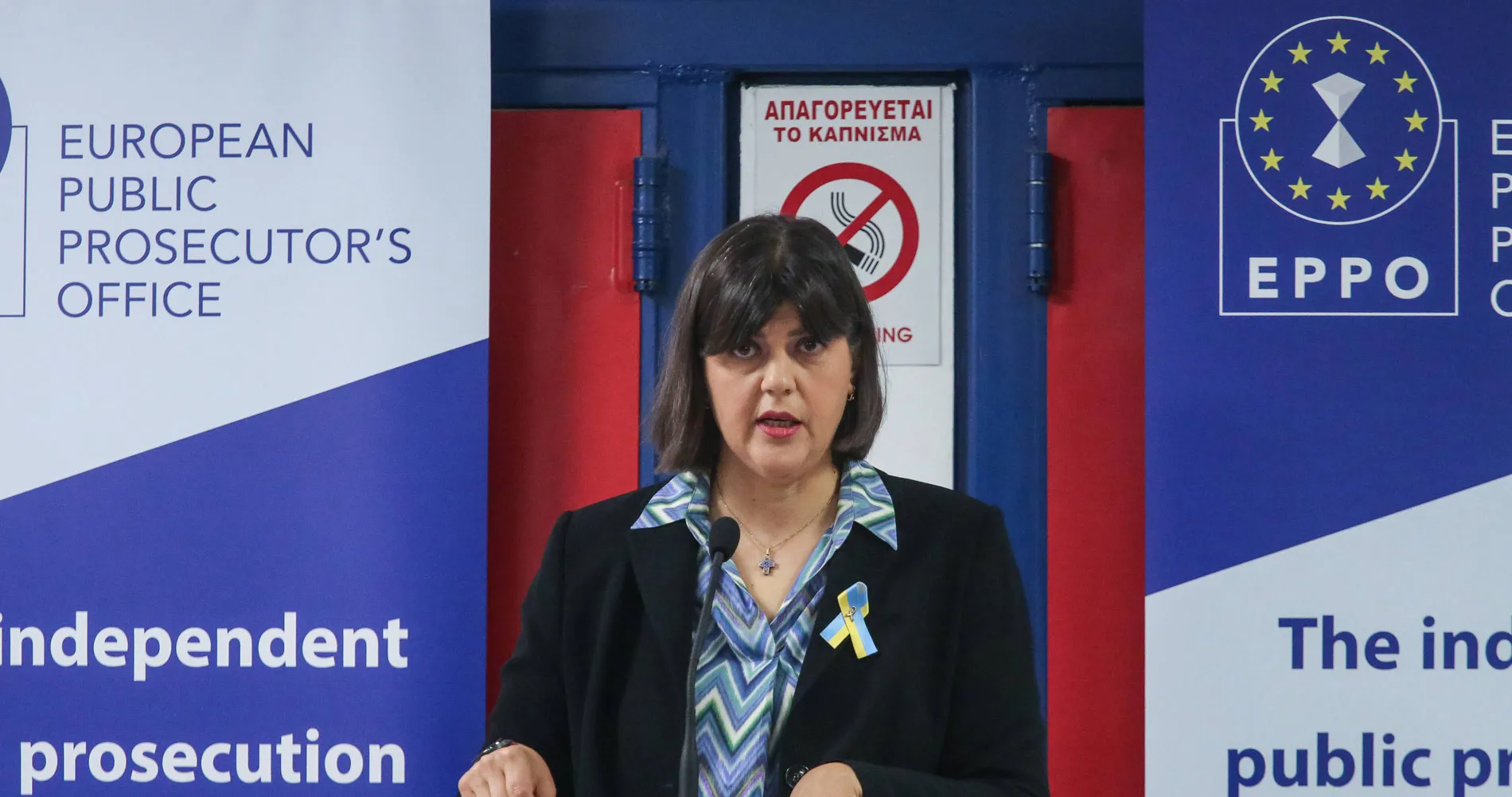
This situation has been severely exacerbated by the fallout from a major scandal in Greece concerning the mismanagement and fraudulent misappropriation of EU agricultural subsidies, which came fully to light in the middle of 2025. The European Public Prosecutor’s Office (EPPO) began investigating systemic fraud within OPEKEPE, the Greek agency responsible for distributing billions in EU agricultural subsidies. This investigation revealed a complex scheme where OPEKEPE officials and some cabinet members were involved in processing fabricated land claims and false declarations, pouring more than EUR 30 million to non-existent farmland and livestock between 2019 and 2022. The scandal led to the resignation of four ministers and the shutdown of OPEKEPE in June 2025.
Adding to the crisis, the European Commission imposed on Greece a massive EUR 415 million fine, penalizing the country for the poor oversight of these funds by OPEKEPE between 2016 and 2023. The mismanagement is understood to span multiple governments.
The core of the current protests is that the post-scandal review of all subsidy applications has resulted in substantial delays and a sharp reduction in payments. Many livestock farmers received no compensation for devastating losses from natural disasters, including a major sheep and goat pox outbreak that necessitated the culling of hundreds of thousands of animals in August 2024. The farmers argue that delaying legitimate payments while the investigation proceeds is a form of unfair collective punishment, leaving them unable to plan for the next growing season or to repay accumulating debts.
The government has sought to address the frustration. On 1 December 2025, Rural Development and Food Minister Kostas Tsiaras announced the disbursement of millions of Euros in overdue subsidies that had been frozen following the OPEKEPE scandal. While acknowledging the farmers’ “democratic right to protest,” he assured them that “all the funds owed to legitimate farmers and livestock breeders will be paid in full.”
Despite the Minister’s assurances and the promised disbursement of funds, the deep distrust stemming from the OPEKEPE scandal quickly turned the farmers’ discontent into widespread, disruptive blockades by November 2025. Hundreds of farmers used their tractors to block key national infrastructure, including sections of the Athens-Thessaloniki national highway near Larissa, as well as critical border crossings with Bulgaria and North Macedonia. Clashes with riot police erupted, notably near the city of Nikaia, where officers deployed tear gas against farmers attempting to breach barricades. The government’s warnings against blocking strategic points proved ineffective, as farmers rapidly intensified their actions.
The peak of the escalation occurred on 8 December 2025 on the island of Crete, where enraged farmers stormed the tarmac of the Nikos Kazantzakis International Airport in Heraklion, forcing the suspension of all flights. In Chania, similar clashes broke out near the airport, resulting in riot police using tear gas and stun grenades to disperse the crowd, who retaliated by attacking officers with stones and overturning a police patrol car.
This unprecedented disruption of a major international airport marked a critical turning point in the conflict between the farmers and the state. Consequently, the Supreme Court prosecutor ordered an immediate intervention to investigate offenses committed during the farmers’ demonstrations. Compounding the tensions, on 12 December, a major police operation on the island of Crete, one of the epicenters of the protests, resulted in the arrest of 15 individuals—including an agricultural cooperative president, farmers, accountants and a lawyer—accused of participating in a criminal organization that illegally received EU subsidies. This action provided a real-time reminder of the fraud at the heart of the crisis.


The government is now attempting to balance the need to resolve the crisis with its commitment to reforming the corrupt subsidy system. On 10 December Mitsotakis took action, including calling an emergency meeting with senior government officials, aiming to accelerate the disbursement of over EUR 1 billion in pending agricultural subsidies and compensation before the end of 2025.
The current stand-off is more than a dispute over money; it represents a deep fracturing of the relationship between the country’s agricultural backbone and the central authority. The injustice is apparent: fraudulent actors within the political establishment profited immensely while honest farmers have been left to bear the financial burden of the subsequent clean-up. With protests threatening to spread to ports and other strategic infrastructure targets, the government faces a complex challenge to regain the lost trust of the nation’s agricultural community.
Far from being an isolated event, the recent clash over EU agricultural subsidies serves as the newest chapter in a long history of fiscal deception. The term “Greek Statistics” became a pejorative shorthand in Brussels following the 2004 revelation that Athens had systematically “doctored” its economic data to meet the criteria for Eurozone entry in 2001. At that time the government admitted that its previous budget deficit reached 6.44%, a level significantly higher than Eurozone’s Maastricht Treaty rule to keep budget deficits below 3% of GDP. Furthermore, the use of cross-currency swaps primarily with the US investment bank Goldman Sachs allowed Greece to hide roughly EUR 2.8 billion of debt in order to appear compliant with Maastricht criteria.
Ultimately, this Greece-EU confrontation is a reminder, if one were needed, of how Greece managed to enter the EU through “creating” the appropriate “Greek statistics”, which has cost the EU billions of Euros, has weakened EU authority and Greek credibility.