

The Anabaptist movement celebrates its 500th anniversary in 2025. The legacy of Jakob Hutter are the Free Churches of the world. His movement pioneered self-determined religious belief. Today, the Catholic Church is celebrating the Anabaptist movement with many events. Through his strength of faith and persuasiveness, Hutter managed to reform the Catholic Church over many centuries. A success that not many can claim for themselves.
Miriam Eulert
23 December 2025
French version | German version
In 2025, the 500th anniversary of the Anabaptist movement has been celebrated worldwide. Today, the majority of the approximately 50 000 Hutterites live in Canada (approx. 70%) and the USA and no longer in Europe. The origins of this Christian community lie in the western province of Austria, Tyrol. The Hutterites are an Anabaptist religious community that is often classified in the same category as the Amish and Mennonites.
Today, these movements are celebrated by the Catholic Church. The Catholic Church now sees the Anabaptist movement of the 16th century as the root of today’s Free Churches, which recognize a “Bible-oriented way of life, baptism by faith, freedom of religion and conscience, the priesthood of all believers, the desire for peace, just forms of society, and the separation of church and state.” Since 2013, the state-recognized free churches in Austria have included all church congregations “that belong to the Federation of Baptist Churches in Austria, the Federation of Evangelical Churches in Austria, the Elaia Christian Churches, the Free Christian Church-Pentecostal Church in Austria, or the Mennonite Free Church of Austria.” An estimated 40 000 believers belong to these churches.
During Jakob Hutter’s lifetime, his religious community was labeled heretical. They were ruthlessly persecuted and executed by the authorities and the church.
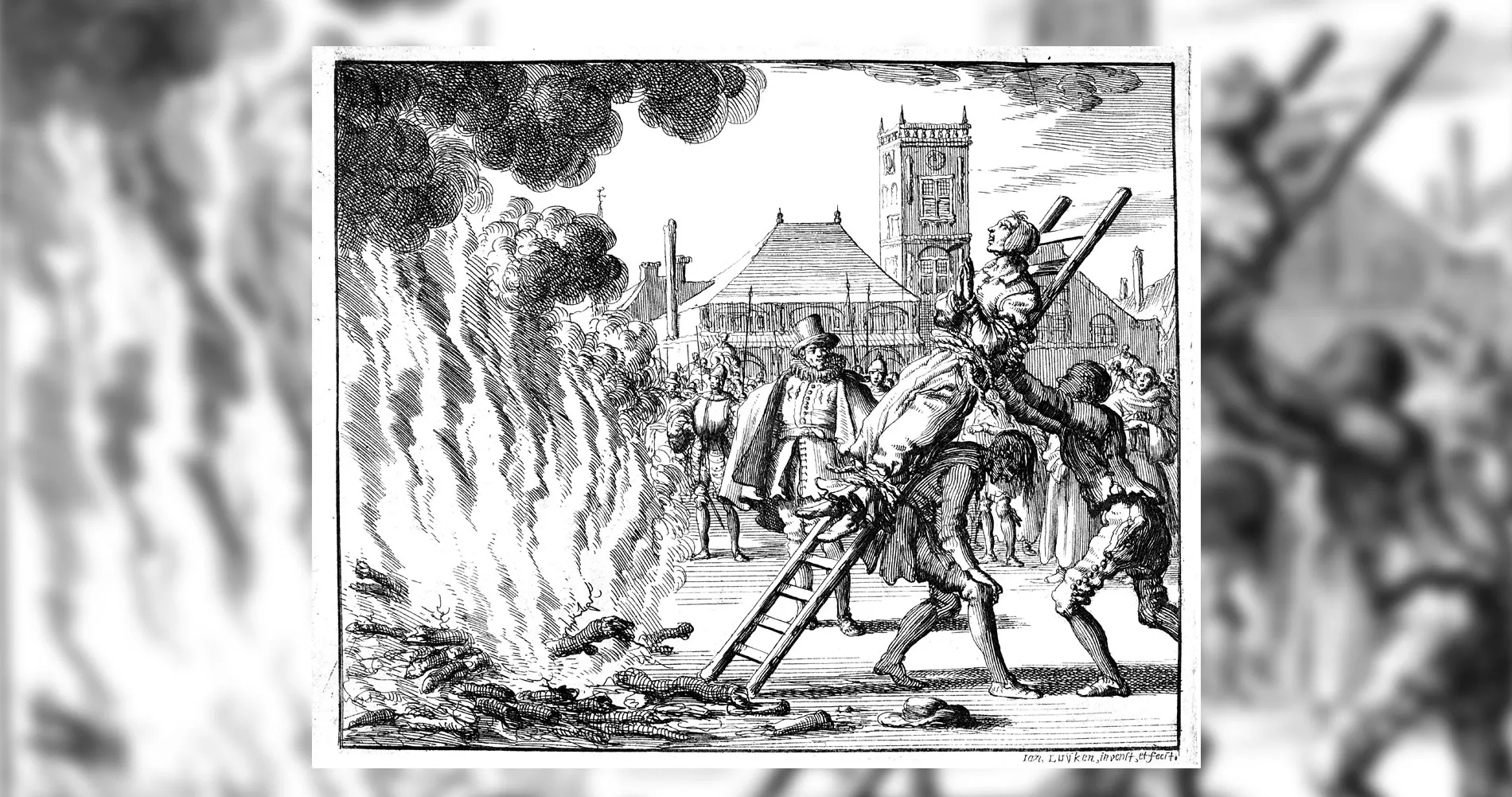
Innsbruck, February 1536. Jakob Hutter is burned at the stake in front of the „Goldenes Dachl“ (translation Golden Roof). The South Tyrolean Anabaptist leader had refused to renounce his faith. After days of severe torture, he dies in public by burning – a demonstrative act in the presence of Habsburg officials and the population. The charge: heresy. Hutter had built up a community in Tyrol and Moravia that rejected violence, shared property, and baptized adults. For the authorities, this was reason enough for the death penalty.
The Anabaptist movement began in Zurich in 1525, when a small group of reform-minded individuals split from Ulrich Zwingli. The reason for this was a dispute over infant baptism. The Anabaptists rejected it. In their view, baptism should only take place on the basis of a personal profession of faith – a conscious decision, not an administrative act.
This step challenged the religious practice of the time. Religion was not a private matter. Those who were baptized became part of a denomination – and thus also part of a social order. Adult baptism defied this logic.
For the Habsburgs, the ecclesiastical elite, and even many reformers, what Hutter and the Anabaptists preached was provocative: adult baptism, voluntary faith, nonviolence. They even dared to question the self-evident unity of church and state.
The movement did not demand separation of church and state in the modern sense, but it deliberately distanced itself from the authoritarian church. The Anabaptists rejected a religion controlled by the authorities and practiced their faith outside the existing ecclesiastical and state order—a step that was seen as an attack on the social fabric.
The movement was based on the Sermon on the Mount: renunciation of violence, communal ownership of property, truthfulness. They refused to take oaths, refused military service, and shared their possessions. Those who were baptized committed themselves to a nonviolent life and to rejecting state authority in matters of faith. Most Anabaptists lived in simple social circumstances—as farmers, craftsmen, day laborers. Their way of life challenged existing hierarchies. The church, the nobility, and even many reformers rejected these principles.
In the Habsburg hereditary lands, the first baptisms were followed by systematic persecution. In Tyrol, where the movement spread rapidly, Anabaptists were persecuted and punished by royal decree. The Habsburgs declared adult baptism a criminal offense. Those who did not comply were imprisoned, tortured, or executed. Even those who gave shelter to Anabaptists faced punishment.
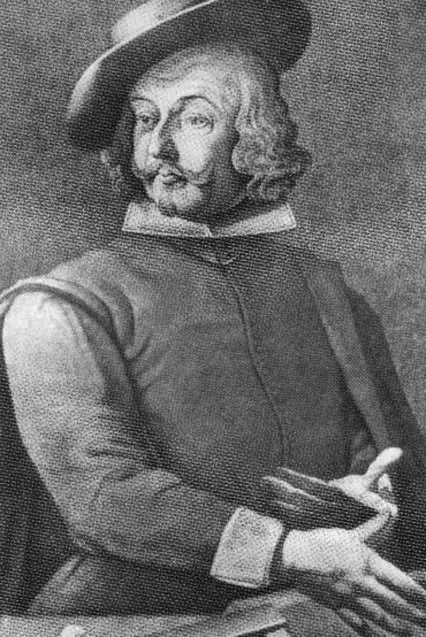 Etching, 18th century, unknown author – Bookscan. Jakob Hutter, founder of the Hutterer. © Public domain
Jakob Hutter was already an important figure in the movement at this time. In Moravia, he had established a community in which property was managed collectively. Hutter was arrested in Klagenfurt in 1535, transferred to Innsbruck, and interrogated and tortured there for several days. He refused to make a statement until the very end. The execution took place on 25 February 1536. Today, a memorial plaque by Innsbruck’s Golden Roof commemorates his legacy.
The repression had far-reaching consequences. Many Anabaptists fled Austria. Their networks shifted to Moravia, Saxony, Holland, and later to North America. The persecution led to the geographical spread of the movement—and to its structural consolidation. Anabaptist settlements with stable social orders developed in numerous regions. Following in Hutter’s footsteps, so-called Bruderhöfe (brotherhoods) emerged in Eastern Europe – collectively organized communities with shared property, their own schools, and religious autonomy. Some Anabaptists even withdrew from all forms of social order – Thomas Kaufmann of the University of Göttingen calls them “the first hippies.”
The Münster Rebellion or Anabaptist dominion of Münster was an exception in the history of the movement. In 1534, radical Anabaptist groups seized power in the Westphalian city. Under Jan van Leiden, a theocratic regime was established. Property was expropriated, polygamy was introduced, and dissenting voices were suppressed. The city was declared the “New Jerusalem.” In 1535, the prince-bishop’s troops ended the reign. The leaders were executed and their bodies hung in iron cages at St. Lambert’s Church. The cages have been preserved to this day.
It is difficult to assess how much of the historical accounts of Münster are accurate and how much has been distorted by religious antagonism. However, it is undisputed that the events in Münster had a lasting impact on the perception of the Anabaptists. Nonviolent, communally organized Anabaptist groups later distanced themselves from Münster. Nevertheless, the political impact of the events was considerable. The movement continued to be criminalized. Its members were considered dangerous—even if they did not use violence. To this day, Anabaptism is mostly condemned by representatives of the denominational churches.


In the 18th and 19th centuries, numerous Anabaptist groups emigrated to North America. There they were able to organize their way of life with greater independence. Numerous Anabaptist communities still exist in the US and Canada today. Two of the best known are the Amish and the Hutterites.
The Amish reject military service, baptize only adults, and live in deliberately secluded settlements. Electricity, cars, and modern technology are largely avoided. Their lifestyle is considered backward by many. What is less well known is that their roots lie in one of the most radical Reformation movements. The Amish adhere to principles that were considered revolutionary in the 16th century—and are still not taken for granted today: renunciation of violence, individual freedom of belief, rejection of state-controlled religion.
The Hutterites trace their heritage directly back to Jakob Hutter. In Canada and the US, they live in colonies with communal property, collective decision-making structures, and clear religious rules. Schooling takes place internally, the organization is grassroots democratic, and the lifestyle is simple.
Today, the Anabaptists are often perceived as a historical footnote. However, their ideas—no infant baptism, no military service, no oaths, no amalgamation of religion and state power—marked a break with the religious norms of their time. The movement was persecuted because it lived by a different order. Five hundred years after its inception, its legacy remains visible—in North America, in the sources of Reformation history, and in a set of principles that were risky at the time and are now considered fundamental values.
In Germany, a whole series of events and exhibitions commemorate the Anabaptist community. Under the motto “Daring! 500 Years of the Anabaptist Movement 1525–2025,” the year 2025 was celebrated.